Every year around this time we get the same call. Someone has decided this is the year they build, and they want to know when to get started. The unspoken assumption is nearly always the same: we will kick things off in spring or summer, when the weather is good and building feels like the right thing to be doing.
It is a fair instinct. It is also, for most people, the wrong way round.
Here is the honest version. Summer is when you want to be on site, watching the frames go up and the roof go on. It is not when you want to be starting from scratch. The part of a build that takes the longest is not the building - it is everything that happens before the building. Design, drafting, and consent. That front end is the long pole, and winter is exactly when to get it moving. Start it now and you are on site in spring with the whole good-weather season ahead of you. Wait until spring to start drawing and you have quietly written off a whole year.
The short version: The build itself is the fast part. Design and building consent are what take the time, and they happen at a desk, not on a wet site. Get your drawings and consent moving through winter and you break ground in spring, reach weathertight before the worst of next winter, and are enjoying the home (or at least the deck) by the following summer. Leave the start until spring and you lose a whole season sitting in the design and consent queue.
1. The real timeline: where the months actually go
Most people picture a build as the bit they can see - the slab, the frames, the roof, the fit-out. That part is real and it takes a good chunk of time. But it is the back half of the story, not the front.
Here is roughly how the phases stack up on a typical new home on this coast. These are honest ranges, not promises, and every site is different.
| Phase | What happens | Rough duration |
|---|---|---|
| Concept and design | Working out the home, the site, the budget, the layout | 6 - 12 weeks |
| Drafting and documentation | Full working drawings, engineering, the consent set | 4 - 8 weeks |
| Building consent | Lodgement through to consent issued | ~20 working days, longer with coastal or geotech factors |
| Construction | Site works through to code of compliance | 7 - 12 months on a typical new build |
Add the front end up and you are looking at something in the region of four to seven months from the first sketch to a consent in your hand, before a spade touches the ground. None of that phase depends on the weather. It happens at a desk. Which is exactly why winter is the right time to do it.
For a full walk through what the consent stage involves once your drawings are ready, our building consent to code of compliance guide for Northland lays out the whole journey from lodgement to the final sign-off.
2. Design and consent is the long pole, not the build
If there is one thing worth understanding before you start, it is this. The thing that decides when you get your keys is usually not how fast the builder works. It is how early the design and consent phase got going.
We see it both ways every year:
- The people who started their drawings in winter are lodged for consent by late winter, consented by early spring, and on site as the weather turns. They ride the good season all the way to weathertight.
- The people who "start" in spring are still choosing a layout when the first fine week arrives. By the time their consent is granted, summer is half gone, and they break ground heading into the following autumn.
Same builders. Same house. A season apart in the finish, decided entirely by when the front end started.
The frustrating part is that the design and consent phase is the one part of the whole process where waiting for good weather makes no difference at all. You can draw a house in the rain.
3. Why the queue for good builders fills up before summer
There is a second reason winter matters, and it has nothing to do with weather. It is scheduling.
Good builders on this coast do not have infinite capacity. We take on a certain number of builds at a time and do them properly, which is the whole point of choosing a locally-owned team over a volume outfit. The consequence is that spring and summer starts get booked out well ahead. By the time the weather is warm and everyone has decided this is their year, the diaries for that season are largely spoken for.
Getting your design done in winter does two things at once. It gets your consent moving, and it gets you a real start date in the schedule before the good season fills. Leave it late and even with a consent in hand you can find yourself waiting on a slot.
If you are still weighing up who to build with, our guide on how to choose a builder in Northland covers what actually separates a good one from a cheap quote.
4. Winter site starts are genuinely fine up here
Now the objection we hear most. "Surely you do not want to be starting a build in the middle of winter?"
In a lot of the country, fair enough. In Northland, the honest answer is that a winter start is completely normal. Our winters are mild. The trades keep working right through. The stages that get a house from bare site to weathertight - foundations, framing, roof, cladding, joinery - all proceed perfectly well in a Northland winter.
Where the weather does have a say:
- Earthworks and the slab pour. These are the genuinely weather-sensitive stages. You need a dry enough window to strip the site and pour concrete, and a good builder programmes them around the forecast rather than fighting it. A wet week here costs a day or two, not a month.
- Everything after weathertight is indoors. Once the house is closed in, the linings, the fit-out, the kitchen and the finishing carry on regardless of what the sky is doing. Rain outside stops mattering.
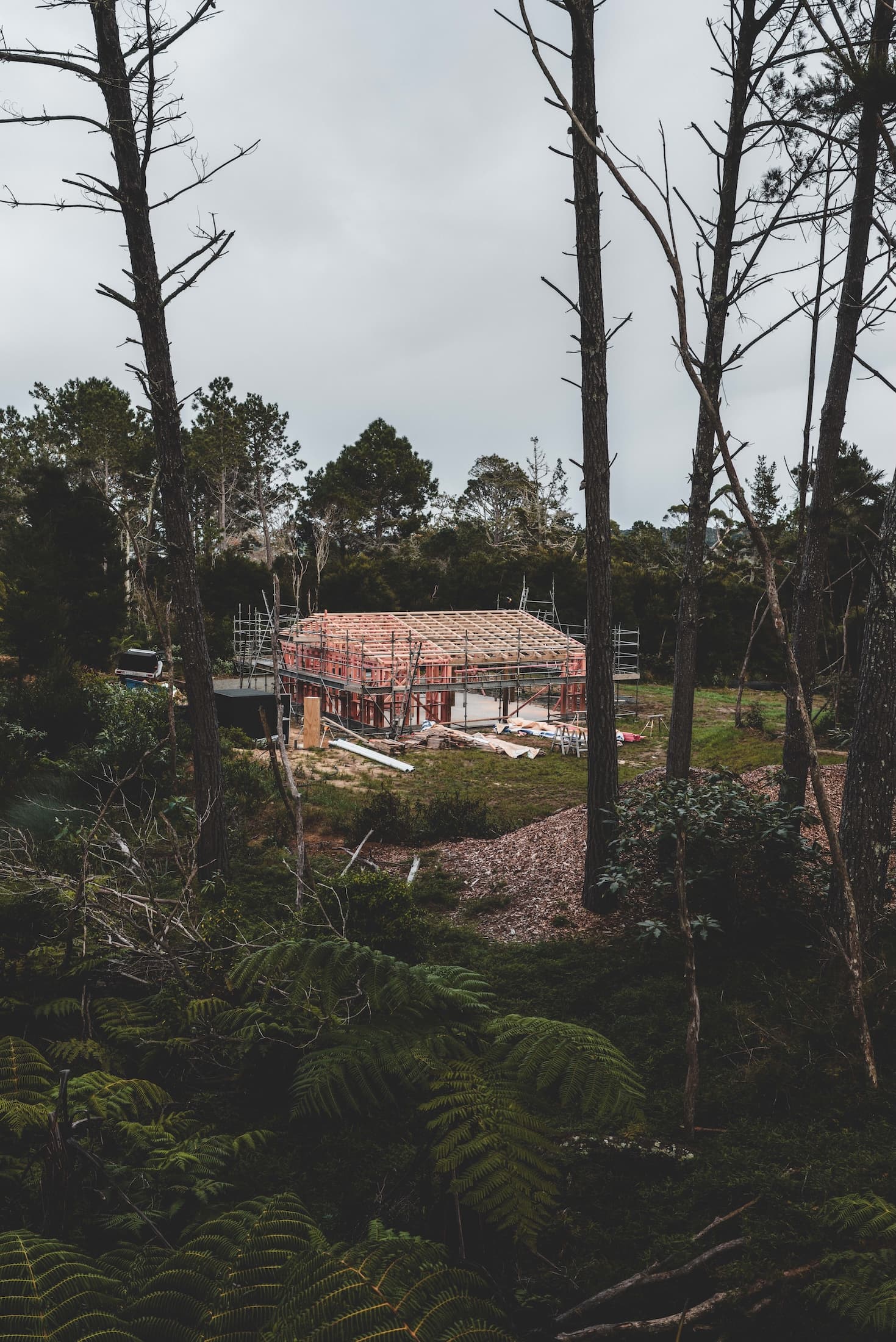
So the picture of a build grinding to a halt in the wet is mostly a myth on this coast. The programme flexes around the odd wet day and keeps moving. A build that starts on site in spring, off the back of a winter design phase, gets its weather-sensitive early stages done in the drier months and is closed in before next winter even arrives. That is the sweet spot.
For more on how this coast shapes a build once you are on site, building in the Mangawhai coastal environment covers what the salt, wind and exposure ask of a home here.
5. Design plus build under one roof compresses the front end
The front end is the long pole, so the biggest lever you have is anything that shortens it. This is where doing the design and the build under one roof earns its keep.
The slow version of the front end has handoffs in it. You engage a designer, wait for drawings, take them to a builder, discover the budget does not work, go back to the designer for changes, then start the consent set. Every handoff is a queue, and the queues are where the months quietly disappear.
When the design and build sit under one roof with in-house drafting, that back-and-forth largely goes away. The design is costed against a real build budget as it is drawn, not after. Buildability is checked as you go, not discovered later. The consent documentation flows straight out of the same team that will build the thing. It is not that any single step is faster. It is that the gaps between the steps close up.
If you want the fuller comparison of the two approaches, we wrote about design and build versus architect-first and where each one makes sense.
The practical upshot: doing it this way, and starting in winter, is the shortest honest path from "we want to build" to standing in the finished home.
6. What starting now actually looks like
If you are reading this in deep winter and thinking about next summer, here is the honest sequence.
- Now (winter). Have the first conversation, get the site and budget understood, and start the concept design. This is the single most important move, and it costs you a coffee and an afternoon to begin.
- Late winter. Design settled, working drawings and the consent set under way.
- Early spring. Consent lodged, or granted, and a start date locked in the schedule.
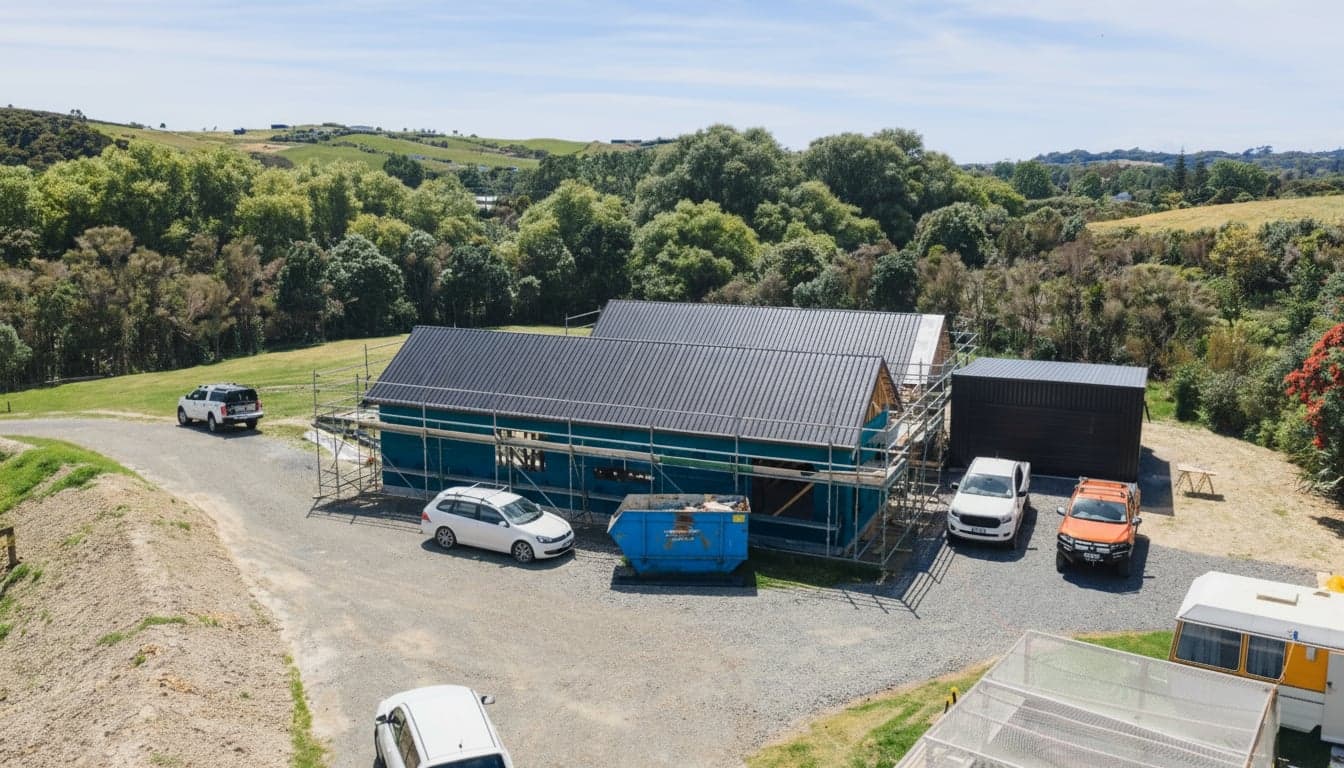
- Spring. On site. Earthworks and slab in the drier weather, frames up, into the good season.
- Through summer and autumn. Weathertight, then the fit-out, closed in against the following winter.
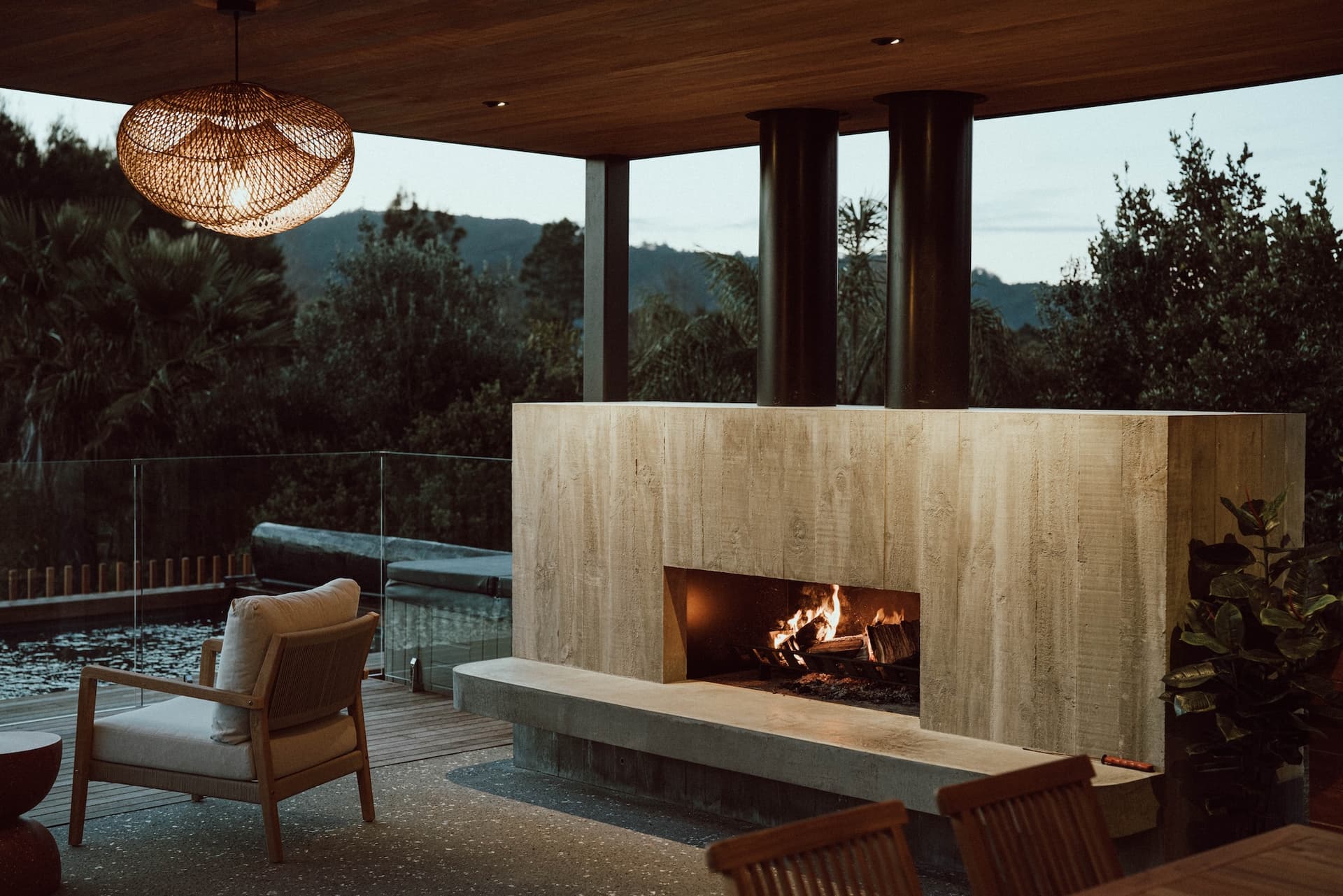
- Following summer. In the home, or at the very least out on the deck enjoying the season you would otherwise have spent still waiting on a consent.
The people who get that timeline are almost always the ones who started the front end in winter while everyone else was waiting for the weather.
Whether you are looking at a new build in Northland or specifically building in Mangawhai, the move is the same. Get the design and consent phase moving now.
7. Frequently asked questions
Can you build through a Northland winter?
Yes. Northland winters are mild compared to most of the country, and the trades keep working right through. Foundations, framing and getting a house to weathertight all proceed in winter. Rain costs you the odd day here and there, mostly on earthworks and the concrete pour, and a good builder plans the programme around it. Winter is a normal time to be on site here, not a reason to wait.
How long does design and consent actually take?
Honest ranges: concept and design is usually 6 to 12 weeks depending on the size of the home and how quickly decisions get made, drafting the full consent documentation is another 4 to 8 weeks, and building consent lodgement to issue runs around 20 working days when the council has everything it needs, though coastal or geotech factors can stretch that. All up, from first sketch to consent in hand, plan for roughly 4 to 7 months before a spade goes in the ground.
When should I start if I want to be in by next summer?
Start the design now. If you want to be enjoying the home, or at least the outdoor space, by the following summer, the design and consent phase needs to be running through winter so you break ground in spring. Leave it until spring to start drawing and you have effectively booked yourself in for the summer after next.
Does rain delay a winter build in Northland?
It can, but less than people expect. The weather-sensitive stages are earthworks and the slab pour, where you need a dry enough window. Once a house is framed and roofed, the inside work carries on regardless of what the sky is doing. A realistic programme builds in a few weather days rather than pretending it never rains.
Is it cheaper to build in winter?
Not dramatically, and we would not sell winter on price alone. The real saving is time, not dollars. Starting the front end in winter means you are not sitting in the consent queue while summer slips past. That said, good builders fill their spring and summer schedules early, so getting your design done in winter also locks in a start date before the calendar fills up.
Talk to a builder who lives here
We are a family-owned, locally-owned team based at Lang's Beach, and we build right across this coast. Every winter we have the same conversation with people who wish they had started their drawings a season earlier. The ones who get it moving now are the ones standing in a finished home a year from now instead of still waiting on paperwork.
If building next year is on your mind, the best thing you can do in the middle of winter is start the design. We handle new builds and the whole design and build under one roof across Mangawhai, Mangawhai Heads, Te Arai, Waipu and Lang's Beach. Have a chat with Reece for an honest read on the timeline for your section and what starting now would actually mean for your finish date.
- The Boaz Developments team