Most Mangawhai builds start with the same question. Do I commission an architect, finalise the plans, then find a builder, or do I go to a design + build firm and do both under one roof?
It's an honest question and the answer matters. The path you pick shapes how much your project costs, how long it takes from first sketch to keys, how much control you have over the design, and how often you're surprised along the way.
This guide is the honest comparison - what each path actually involves, where the cost gets locked in (and where it slips), and which kind of brief suits which path. We sit on the design + build side of this question. We'll tell you when it isn't the right answer for you anyway.
The short version: Architect-first is best when design ambition is the main driver and you've got the budget headroom for the design to lead. Design + build is better when cost certainty, lead time and a straight line from first sketch to keys matter more than the architectural prestige. For most Mangawhai family homes, baches and renovations, design + build under one roof gives a cleaner result. For a true architect-led showpiece, the architect path is the right one.
1. The two paths, in plain terms
Architect-first works like this: you brief an architect (or architectural designer), they develop concept drawings, you iterate, they take it to developed design and then working drawings, the project goes out to one or more builders for tender pricing, and you choose one and build.
Design + build works like this: you brief a firm that does both. They develop the design and the build pricing together, your plans get refined alongside a real number, and when you commit, the firm that priced the project builds the project.
Both can produce a great home. The difference is which conversations happen when, who you're working with at each stage, and where the surprises tend to land.
2. Where the cost gets locked in - and where it slips
This is the part that catches most people out.
On an architect-first project, you generally don't see a real build cost until the working drawings go to tender. That can be six to twelve months into the design process. The architect will give you estimates along the way, but they're estimates. The first time a builder prices the actual drawings is the first time you find out whether what you've designed fits what you can build.
The honest reality is that the answer is often "not quite". Tender prices on full architectural drawings can come back well above the design budget, and you're then into a value-engineering phase - cutting scope, simplifying details, swapping materials - to get the project buildable. That's not the architect's fault, and it's not the builder's. It's structural to the path.
On a design + build project, the build cost is on the table from week one. As the design develops, the number develops with it. If a particular form, cladding, joinery package or finish takes the project out of budget, that conversation happens during design rather than at tender. The result is usually a smaller gap between the number you commit to at the start and the number you finish on.
This doesn't make design + build the cheaper option on the headline. It does make it the more predictable one. For a fuller view of how cost stacks up across a Mangawhai build from site to keys, our 2026 Mangawhai cost guide breaks the components down honestly.
3. Lead time: from first sketch to consent issued
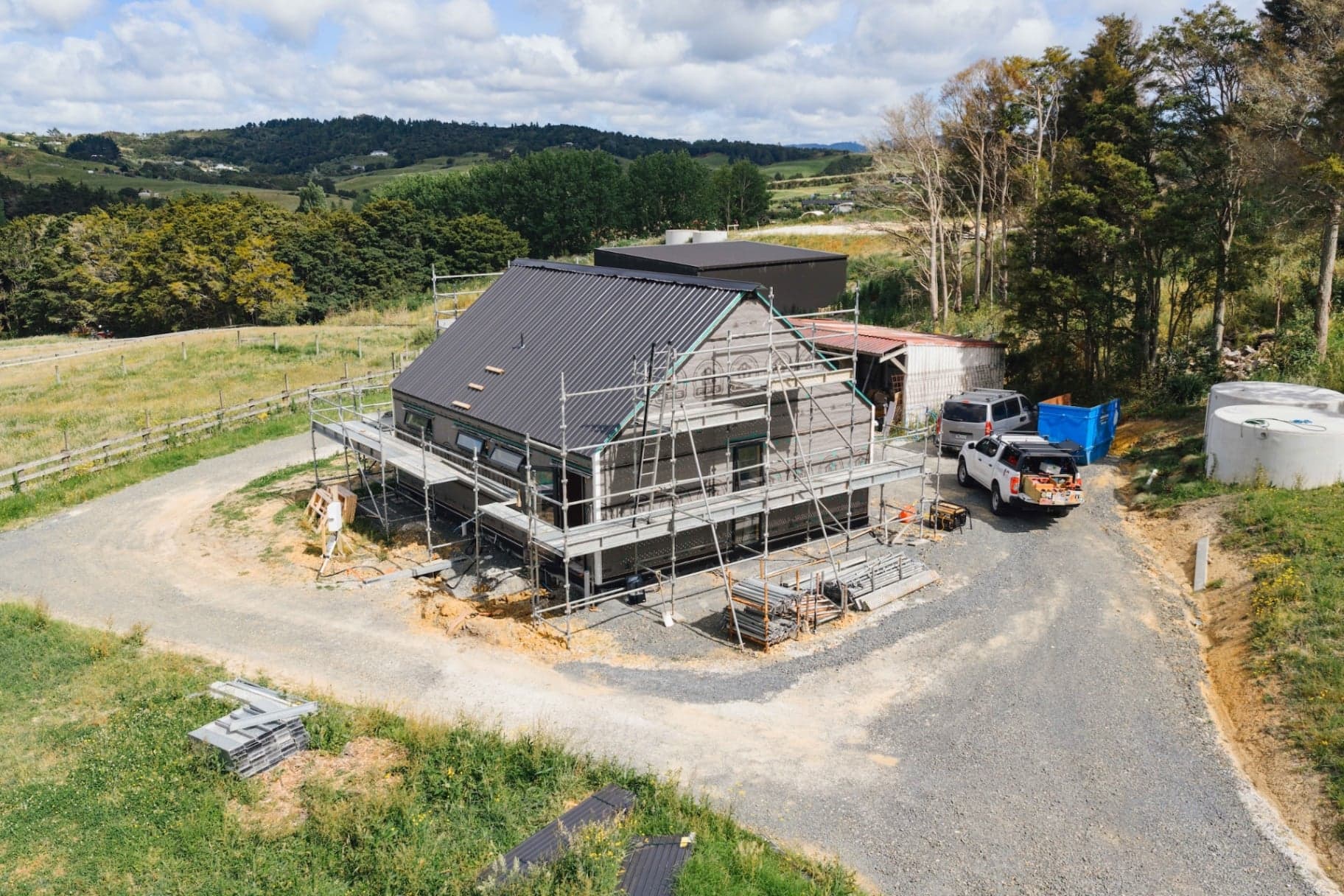
The build itself takes the same time either way. A 220m² Mangawhai family home is a 220m² Mangawhai family home, and once foundations are in, the construction sequence runs the same way.
Where the paths differ is the lead-in.
On an architect-first project, design happens first, build pricing happens after working drawings, and any value-engineering happens after that. If tender prices come in high and the design needs reworking, you might be re-drawing for months. Then the consent goes in.
On a design + build project, design and pricing run in parallel from the start, so working drawings and a confirmed price land at the same time. Consent goes in straight off the back of that. Most of our Mangawhai design + build projects are weeks to months ahead of where an architect-first equivalent would be at the same point.
That matters if you've got a timeline you care about - a baby due, a sold house with a settlement date, a school year you want to be in by, a holiday house you want ready for Christmas.
4. Design control and architectural ambition
This is the genuine trade-off, and the one design + build firms sometimes oversell.
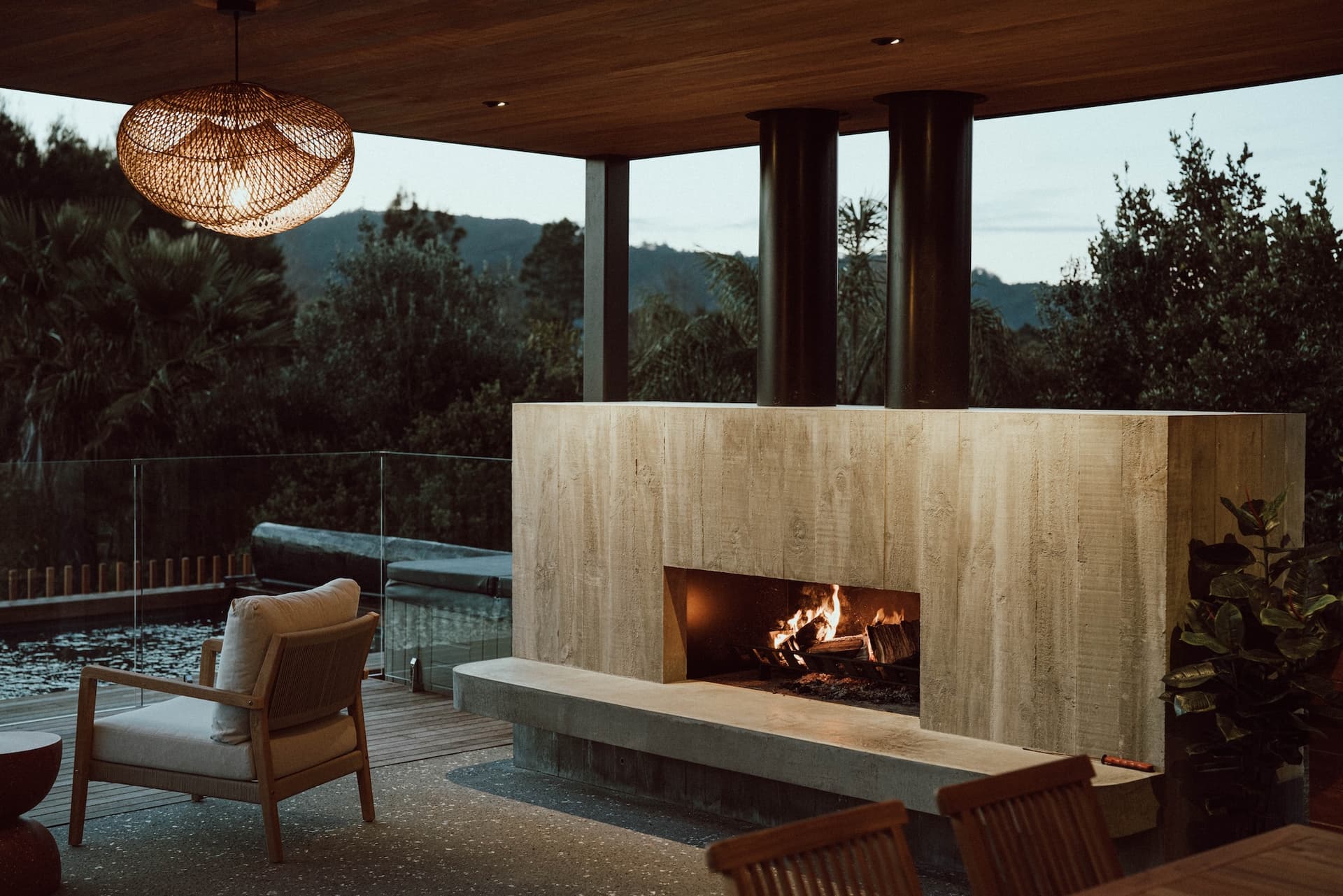
An architect-led project gives you the most design exploration. You're working with someone whose job is design first and budgets second, and that produces things you wouldn't get any other way. Award-winning architectural homes on the Mangawhai coast almost all come down this path.
A design + build project is a different conversation. Design is grounded by cost from the start. That's helpful when you want a beautiful, practical home that you can actually afford to build. It's a constraint when you want pure design exploration regardless of cost. Neither is wrong. They're different briefs.
Where design + build wins on this front is when the in-house draftsperson is genuinely good and works hand in hand with a builder who's built dozens of similar homes around the same coast. The combination - someone who can draw well plus someone who knows what's been built five hundred metres up the road - tends to produce designs that are both lovely and buildable on real budgets.
5. What design + build looks like under our roof
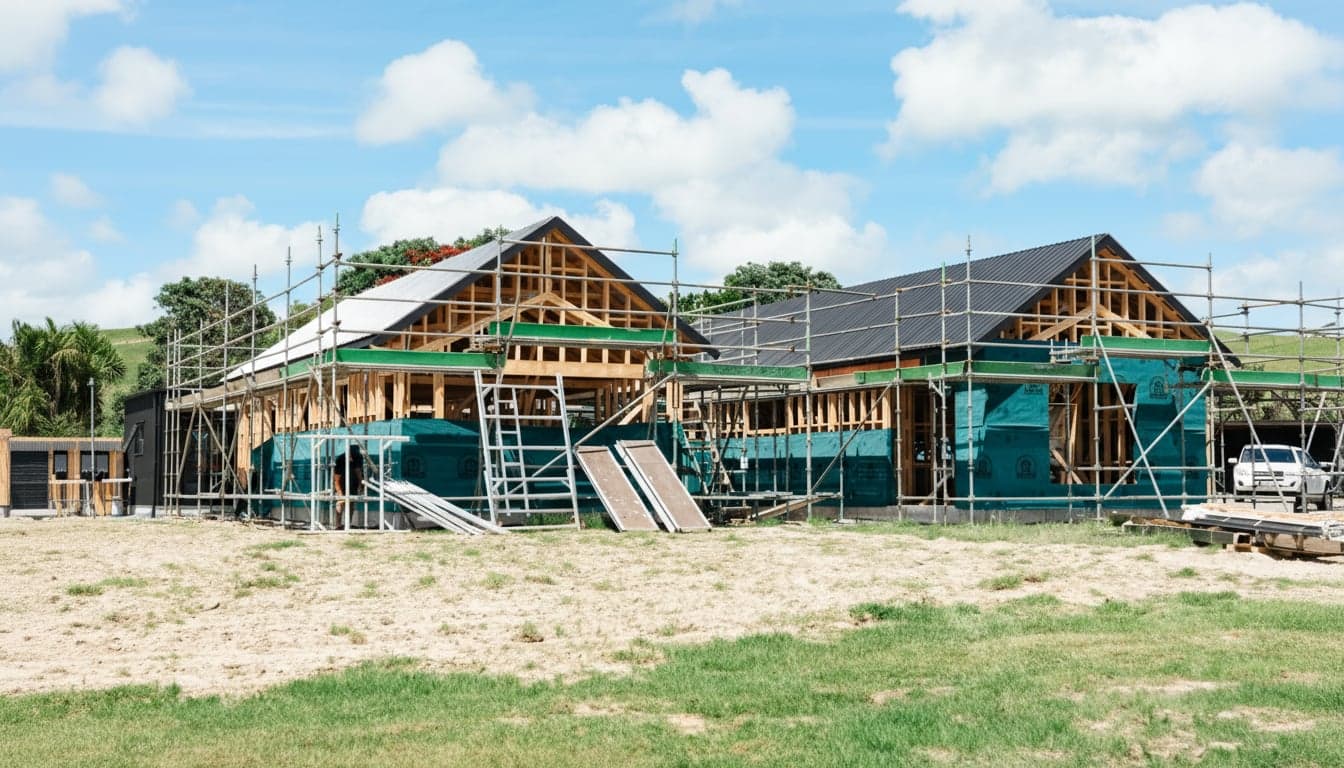
We've got an in-house draftsman who takes Mangawhai projects from first concept through to consent-ready plans, working alongside the build team from the very first conversation. The point isn't just that it's faster. It's that the design develops with a real build cost, so the plans and the price grow up together.
A typical sequence:
- First conversation. We sit down with you on site if possible. You tell us what you want and what you can spend, and we tell you whether those two things are in the same room.
- Concept design. Our in-house draftsman puts a concept together, with rough costings as it develops. Two or three iterations is normal.
- Developed design. Working through the form, layout, key materials and the things that drive cost - cladding, roof, joinery, kitchen, bathrooms. The build cost gets refined alongside.
- Consent-ready drawings and a confirmed price. Working drawings, specifications, and a fixed-scope build contract. Consent lodges.
- Build. The team that priced it builds it. The draftsman is still in the loop if anything needs adjusting on site.
- Code of compliance and handover. Keys, warranties, a real walk-through, and a builder you can call when something needs looking at.
The honest advantage is one set of relationships from concept through to keys. The same people see the design, the cost and the build all the way along, which means fewer assumptions get lost between parties and fewer surprises land.
6. When architect-first is the right call
We'll say this plainly: design + build isn't the right answer for everyone.
Go architect-first when:
- Design is the point. You want a serious architectural statement, an awarded designer on the drawings, a home that's deliberately ambitious in form, light or material.
- The budget can absorb the path. You've got headroom for the design fees and for the iteration time. A complex architectural home runs a different cost model than a design + build family home.
- You enjoy the design process. Some people genuinely love the architectural design phase as its own thing - the iteration, the conversation, the model-making. That's worth something.
- The site is exceptional and deserves an architectural response. A cliffside Heads section with a 270° outlook isn't a standard brief. It can deserve a standard-defying answer.
For the much larger share of Mangawhai briefs - the family home, the bach reno, the second-storey extension, the smart practical new build for a couple downsizing from Auckland - design + build under one roof is generally the cleaner path.
If you're still mapping out which professional to talk to first, our piece on how to choose a builder in Northland covers the questions worth asking in either direction.
7. The other quiet advantage of design + build - one accountable party
When something goes sideways on an architect-and-tendered-builder project, it can be unclear whose problem it is. The architect says the detail is right. The builder says the detail isn't buildable. The flashing is leaking. Whose fault?
On a design + build project, there's one party. We drew it, we priced it, we built it. If something needs sorting, we sort it. That's not a small thing on a project that takes a year.
This is one of the practical reasons local Mangawhai homeowners are increasingly choosing design + build for their family homes. It's not about cutting corners on design - it's about having one team that owns the whole arc, from the first sketch through to the moment something needs a second coat of paint two years in. For a deeper read on the local vs out-of-town builder question that often goes alongside this decision, see our piece on local vs out-of-town Mangawhai builders.
8. Frequently asked questions
What's the difference between design + build and architect-led?
Architect-led separates design and construction. You commission the design first, then go to builders for pricing. Design + build does both under one roof, with the design developing alongside a real build cost from the start.
Is design + build cheaper than going to an architect first?
Not necessarily on the headline, but it gives more cost certainty earlier. Architect-led projects can hit a price shock at tender. Design + build avoids that by costing as the design develops.
Do I lose design control with design + build?
No, but the conversation is different. Design and cost are talked about together rather than design first and cost discovered later. Some people find that grounding helpful. Others want pure design exploration first - that's the trade-off.
Which is faster?
Design + build is usually faster from first sketch to consent, because design and pricing run in parallel rather than back-to-back. Build time is the same either way.
When does architect-first make more sense?
When the design ambition is genuinely architectural and the budget can absorb the path. For most Mangawhai family homes, baches and renovations, design + build under one roof gives a cleaner result.
Have a yarn before you commit to either path
The honest answer to design + build vs architect-first depends on your brief, your site and what you actually want from the process. A real conversation is worth more than a thousand pros-and-cons articles.
We're a family-owned, Langs Beach-based building team with in-house drafting and a design + build process for new homes, renovations and extensions and bach renovations across Mangawhai, Mangawhai Heads, Te Arai, Langs Beach and Waipu. Talk to Reece for an honest read on whether design + build is the right path for what you're trying to build.
- The Boaz Developments team