A small commercial fitout is mostly a scheduling problem. The build itself is rarely the hard part. Trading around it, meeting the compliance a public space carries, and hitting a date you have already told customers about: that is the job.
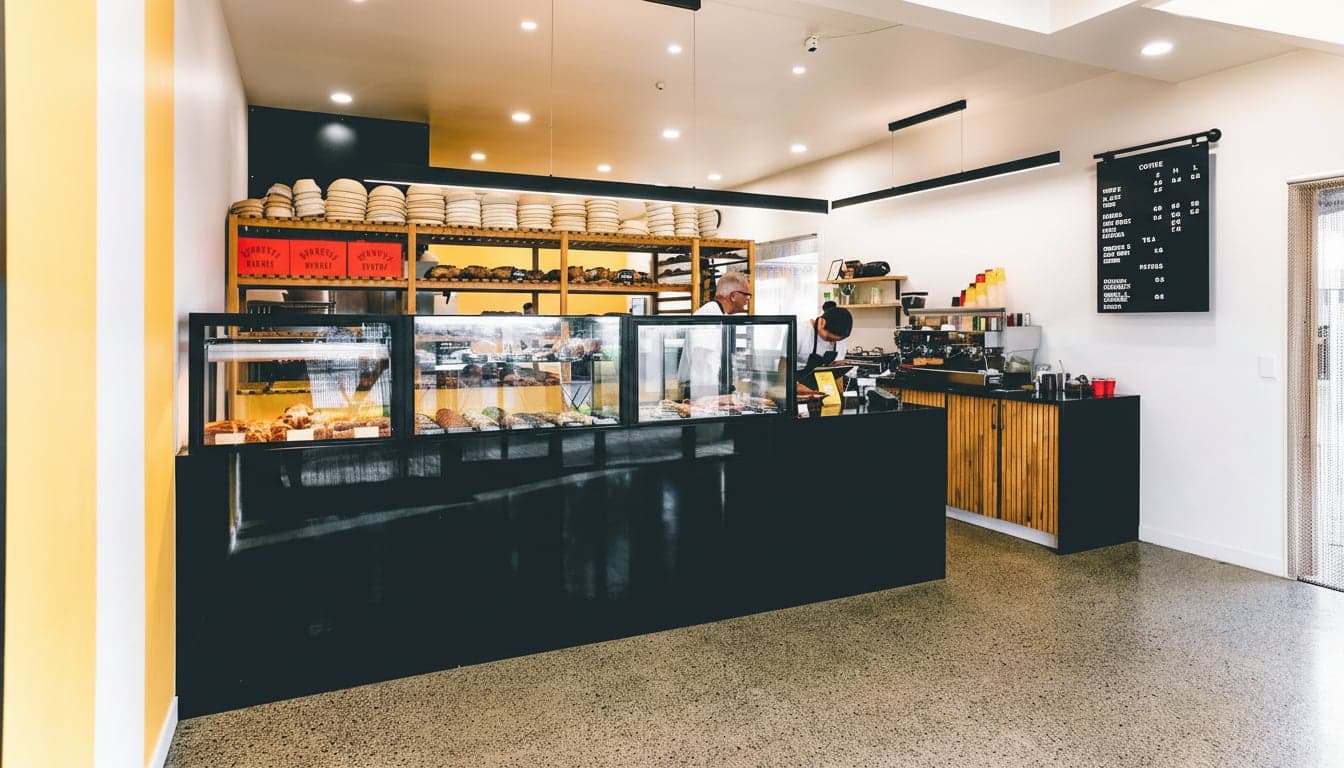
We do a good deal of residential work on this coast, and a steady amount of commercial fitout alongside it. The Bennetts Bakery fitout in Mangawhai is the worked example if you want to see one end to end. This is the general version of what is involved.
The short version: a fitout is run backwards from a fixed date. Compliance for public spaces (accessibility, fire, and whatever your specific use requires) is the part that most often surprises people, and change of use is the consent trigger they miss. The landlord has a say in what you change and what state you leave it in. Get all three settled before anyone picks up a tool.
1. The date runs the job
Almost every fitout has a hard date behind it. A lease starting and rent running. An opening you have announced. A seasonal window you cannot miss, which on this coast usually means being open before summer.
That changes how the work is planned. On a house, the programme runs forward from the start and lands where it lands. On a fitout, the programme runs backwards from the date, and everything else is arranged to protect it.
Practically that means:
- Long-lead items get identified first, before anything else is scheduled. Commercial joinery, specific equipment and shopfront glazing are the usual culprits.
- Consent goes in as early as possible, because it is the piece nobody controls.
- The sequence is built with float in the right places, so one slipping trade does not move the date.
If a builder is not asking about your date in the first conversation, they are not thinking about your job properly.
2. Compliance for a public space
This is the part that catches people coming from a residential frame of reference. A space the public uses carries obligations a house does not.
| Area | What it typically means |
|---|---|
| Accessibility | Entry, circulation, and sanitary facilities have to be usable by people with disabilities. This can dictate layout, not just fittings |
| Fire | Egress routes, travel distances, and where required, detection and alarm provisions |
| Sanitary facilities | Numbers and type set by the use and occupancy, not by preference |
| Use-specific requirements | A food premises carries requirements around surfaces, ventilation and wash facilities that a retail space does not |
None of this is exotic and none of it is a reason to be nervous. It is a reason to have the layout tested against it early, because these requirements shape the floor plan. Discovering at drawing stage that the accessible bathroom needs more space than you allowed is a redesign. Discovering it at inspection is a rebuild.
3. Change of use is the consent trigger people miss
The common assumption is that if you are not moving structure, you do not need consent. For fitouts that is frequently wrong, and the reason is change of use.
If the space is being used for something materially different from what it was approved for, the building's compliance gets reassessed against the new use. Retail becoming a food premises is the classic. An office becoming a space the public occupies is another.
The consequences are worth knowing before you sign a lease:
- It can require upgrades to fire, accessibility or sanitary provisions that were compliant for the old use and are not for the new one.
- Those upgrades can be a significant share of the fitout budget.
- The consent adds time at the front of the programme, which on a date-driven job is the expensive kind of time.
Establish the use question before you commit to a space. A cheaper lease on a building that needs a compliance upgrade is not a cheaper lease. This is the single most useful thing on this page.
Mangawhai and Mangawhai Heads sit under Kaipara District. Langs Beach, Waipu, Ruakākā and Whangārei sit under Whangārei District. Te Arai sits under Auckland Council. Check with the right one.
4. The landlord has a say, in both directions
You hold the lease, so the landlord relationship is yours, but it shapes the build in two ways.
What you are allowed to change. Most leases require landlord approval for alterations. That approval should be in writing and it should be based on the actual drawings, not a conversation. We will give you the detail the landlord needs to make that call properly.
What state you have to leave it in. Make-good obligations are the ones that bite at the end of a lease, years after anyone remembers agreeing to them. If your fitout involves changes you will later have to reverse, that is a future cost worth knowing about now. It sometimes changes what is worth doing: a reversible solution can be the better commercial decision even when a permanent one is cheaper to install.
We flag it when we see it. We are not your lawyer and will not pretend to be, but a builder who has done a few of these knows which changes tend to become make-good arguments.
5. Trading through it, or closing for it
Two options, and it is a commercial decision rather than a building one.
Stage the work and keep trading. Where the space allows, the disruptive stages happen outside trading hours and the site is made safe and presentable at the end of each day. It takes longer overall and costs more, because working around a live business is less efficient than a clear run.
Close for a shorter period. Faster and cheaper to build, with the obvious cost of lost trading.
The right answer depends on your margins, your season and how much of your trade you would lose. What we will do is price both honestly so you can compare them properly, rather than assuming you want the cheaper build.
On a seasonal coast, timing matters too. A closed fortnight in July costs a Mangawhai cafe far less than a closed fortnight in January.
6. What we take on
Cafes, retail spaces and small offices. That is our commercial lane and it sits alongside the residential work we are better known for. Bennetts Bakery is a fair example of the scale and the type.
Larger industrial work and multi-tenant commercial projects are outside what we do, and we would rather tell you that than stretch and do it badly.
The advantage of a builder who does both residential and small commercial on this coast is that we are already here. The trades are local, we know the councils, and we are not running your job from Auckland with a project manager who visits on Tuesdays. For a small business on a fixed date, being able to get someone on site the same day is worth more than it sounds.
7. Before you sign the lease
Four things, in this order:
- Confirm the intended use against what the building is approved for.
- Get a rough compliance read on what that use requires in that space.
- Check the alteration and make-good clauses in the lease.
- Then price the fitout, with the compliance work in it.
Doing these after signing is how a fitout budget doubles.
If you are looking at a space on this coast, have a yarn with Reece before you commit. We will walk it with you, give you an honest read on what the fitout involves, and a free estimate. Better to find the problems while you can still walk away.