Te Arai isn't a normal place to build. That's not a sales line - it's the practical reality, and it shapes everything from what your house is clad in to how long it takes to get a consent across the line. Whether you've bought a bare section with ocean glimpses and a head full of plans, or you've got an older place near the Point that needs dragging into this decade, the coast here asks more of a home than most parts of New Zealand do.
This guide is the honest version of what's different about building and renovating in Te Arai - the site conditions, the covenants, the servicing, the materials - so you go in with your eyes open rather than finding out the hard way once the diggers are booked.
The short version: Te Arai builds and renovations are shaped by four things most inland projects never deal with - exposed coastal conditions that drive material and detailing choices, design covenants on many of the newer sections, off-grid servicing (septic, tank water, power) on most rural lots, and ecological overlays tied to the dunes and the fairy tern habitat. None of these are dealbreakers. They just need budgeting for, and a builder who's worked here before.
1. The site is the first thing that decides your budget
Before anyone talks cladding or kitchens, the section itself sets the tone. Te Arai lots range from flat, services-ready sites in the newer developments through to steep, bush-clad or dune-backed blocks where just getting a level building platform is a project in itself.
The things that move the number most:
- Slope and access. A flat site with road frontage is straightforward. A sloping site needs earthworks, retaining, and sometimes a longer or steeper driveway - each of which adds up quickly. Retaining alone can run from a few hundred dollars a lineal metre for timber up into six figures for engineered concrete on a difficult site.
- Geotech. Sandy and shifting ground is common closer to the coast, and most new builds here need a geotechnical investigation before design is locked in. It's a few thousand dollars up front that can save you a great deal later by telling you what your foundations actually need to be.
- Distance from services. The further your build platform sits from the road and existing infrastructure, the more power connection, water and access cost.
For a fuller view of how the site, servicing and finish all flow into a project budget, our 2026 Mangawhai cost guide breaks the numbers down across new builds, renos and extensions across this part of the coast.
If you're renovating rather than building new, the site matters less - but the age and condition of what's already there matters more. We'll come to that.
2. Covenants and design review - read them before you fall in love with a plan
A lot of the newer Te Arai sections, particularly within the gated developments, come with design covenants. These are rules the developer puts in place to protect the look and value of the whole area, and they can cover a surprising amount: roof pitch and form, cladding materials and colours, fencing, landscaping, even how long you've got to start and finish your build once you've settled.
This catches people out. You buy the section, you brief a designer, you get attached to a plan - and then the design review panel comes back and says the cladding colour's too light or the roofline doesn't fit the scheme. It's far cheaper to design within the covenants from day one than to redraw later.
Our advice is simple: get a full copy of the covenants and the design guidelines before you brief anyone, and make sure whoever designs your home reads them properly. A builder who's worked in Te Arai before will know roughly what the panels expect, but the document is the document - and it's binding.
3. Servicing: most Te Arai sites are off the grid
This is the big one for rural Te Arai sections, and it's where a lot of budgets come unstuck because people assume town services they don't actually have.
| Service | What it usually means at Te Arai | Rough budget |
|---|---|---|
| Wastewater | No town sewer on most sites - you'll need a septic system with a disposal field, sized and consented for the house | $25,000–$45,000+ |
| Water | No town supply on most rural lots - rainwater collected off the roof into tanks, typically 25,000–30,000L of capacity | $8,000–$20,000 |
| Power | Cost depends entirely on distance from existing lines; underground supply on a long run gets expensive | $5,000–$25,000 |
None of this is unusual for the area - it's just normal coastal-rural building. But it needs to be in the budget from the start, not discovered halfway through. On a fully off-grid site, these three items together can add tens of thousands before the house itself goes up.
4. What the coast does to your materials
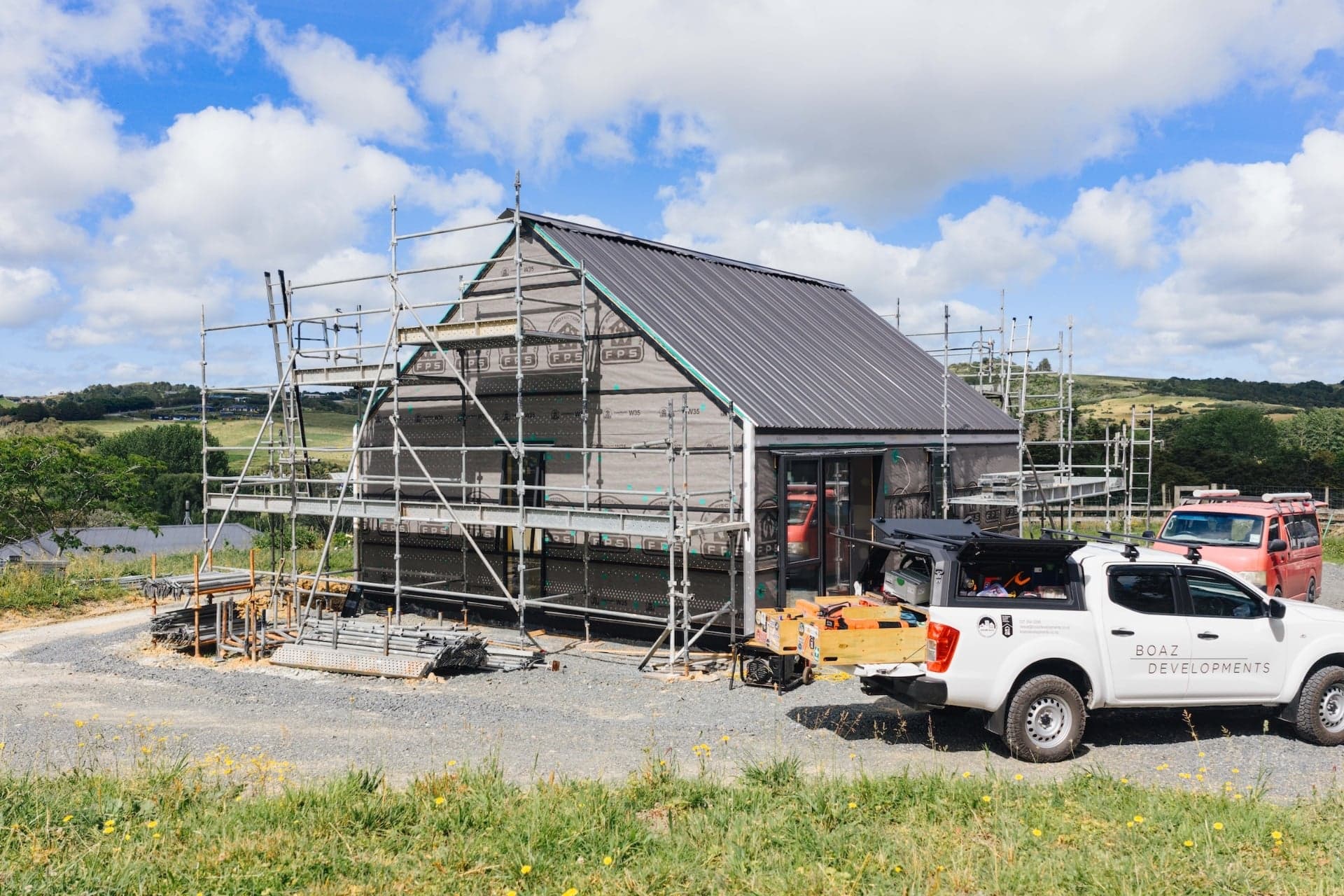
Te Arai sits right in the salt and the wind, and that's not a detail - it's a durability decision that runs through the whole build. The ocean air corrodes standard fixings, weathers cheaper cladding, and tests joinery harder than an inland site ever will. Build to a standard spec out here and you'll see it start to deteriorate within a few years.
What building properly for this environment actually involves:
- Marine-grade fixings - stainless steel rather than standard galvanised. They cost several times more, but they're the difference between a house that lasts and rust streaks down your cladding in year three.
- Durable cladding - cedar, quality composite, or a properly detailed plaster system over a cavity. Whatever the choice, it needs to be specified and detailed for coastal exposure, not just installed.
- Coastal-rated joinery - thermally broken aluminium or timber-framed double glazing rated for the environment. Standard joinery doesn't belong this close to the sea.
- Wind-zone framing - most Te Arai sites sit in High or Very High wind zones, which means heavier framing, more bracing, and stronger fixings throughout.
There's a real cost premium to all of this compared with an equivalent inland build - but it isn't optional, and a builder who pretends otherwise is one to walk away from. For a deeper look at how this coast shapes material and detailing decisions, see our coastal building guide for Mangawhai and Northland.
5. Renovating an older Te Arai or Te Arai Point home
Not everyone's building new. Plenty of the work around here is bringing older homes and baches up to standard - better insulation, modern layouts, recladding, opening up to the view and the outdoor living that's the whole point of being here.
The honest truth about renovating older coastal homes is that the biggest variable is what's hidden behind the linings. Until you strip back, you don't always know what you'll find - and on an older salt-exposed home, that can mean rot, undersized or tired framing, or weathertightness issues that weren't visible from the outside. It doesn't mean you shouldn't renovate. It means you want a builder who quotes with clear allowances for the unknowns rather than handing you one fixed number that won't survive contact with reality.
The flip side: a well-renovated older home in an established Te Arai spot can be a better result than building new on a raw section, because the trees are grown, the site's settled, and the position is often something you simply couldn't get on a new lot. If you're weighing the call, our piece on signs your Northland home is due for a renovation covers the things worth checking before you decide either way.
6. Consents and timeframes - build the wait into your plan
Te Arai building consents go through the relevant council, and like anywhere, the process takes as long as it takes. Beyond the standard building consent, some Te Arai sites need resource consent on top - coastal hazard zones, height limits, or ecological overlays tied to the dunes and the protected fairy tern habitat can all trigger an extra layer of approval.
The practical effect is that the design-and-consent phase here can run longer than on a simple inland section. Add the design covenant review on the newer lots, and you want to be planning months ahead, not weeks. None of it is a barrier - it's just a timeline to respect rather than fight. Our building consent walkthrough for Northland explains what the journey looks like from lodgement through to code of compliance.
7. Frequently asked questions
Can I build whatever I want on a Te Arai section?
Not always. Many of the newer sections carry design covenants that set rules on form, cladding, colour and landscaping, and some sites have ecological or coastal-hazard overlays that affect what and where you can build. Always get the covenants and any consent notices before you commit to a design.
Do I need tank water and a septic system at Te Arai?
On most rural Te Arai sites, yes. Town water and sewer aren't available, so you'll collect rainwater into tanks and treat wastewater on-site with a septic system and disposal field. Both need to be sized and consented as part of the build.
Is it more expensive to build at Te Arai than inland?
Generally yes, for two reasons - the coastal material and detailing premium, and the site and servicing costs (geotech, earthworks, septic, tank water, power runs) that come with rural coastal sections. The house itself costs more to build properly here, and there's more around the house to pay for.
Should I renovate an older place or build new?
It depends on the bones of the existing home and what you're trying to achieve. A sound older home in an established position can be well worth renovating, especially for the mature site and the location. A tired home with hidden weathertightness or framing problems can sometimes cost more to fix than to replace. The only way to know is to have it properly assessed before you decide.
How long does a Te Arai build take?
Plan for the design and consent phase to run longer than a simple inland project, particularly if your site needs resource consent or sits within a development with design review. The build itself runs to a normal timeframe for the size and spec, but the lead-in is where Te Arai projects need patience.
Talk to someone who's built here before
Every Te Arai site is different - the slope, the covenants, the servicing, the exposure all change the picture - and the only way to get real numbers for your project is a proper look at your section, your design and your plans.
We're a family-owned, Langs Beach-based building team working across Te Arai, Mangawhai, Mangawhai Heads, Langs Beach and Waipu. We'll give you an honest read on what's possible on your site before you commit to anything - whether that's a new build or bringing an older coastal home back to life.
Get in touch for a free quote →
- The Boaz Developments team