Langs Beach is one of those places that quietly does most of the work for you. The bay runs north-east, the sand stretches further than it has any right to, and on a still summer morning you can hear the surf from the back of a section a kilometre inland.
That's the brochure. The reality of building here is that the same things that make Langs Beach what it is - the openness, the dunes, the long summer sun, the winter southerlies - also shape every practical decision you make about a home. Build something that ignores them and you'll be repairing it within five years. Build something that responds to them and you'll have a home that feels like it belongs.
This guide is the honest version of what building (and renovating) at Langs Beach really involves - the sites, the exposure, the servicing, the materials, the consent path. We're based here. This is what the coast actually asks of a house in our experience.
The short version: Langs Beach builds and renos are shaped by four things that most inland Northland projects never face - true coastal exposure to salt and wind, rural off-grid servicing on most sections, smart aspect design that balances the north-east outlook with the south-westerly shelter, and material and detailing choices built to last in a salt environment. Done right, none of it is hard. Done in denial of it, all of it eventually shows up.
1. The section is the first decision
Langs Beach sections range from sandy near-beachfront lots through to elevated bush-clad sections behind, with very different cost implications.
The variables that move the build budget most:
- Distance from the road and from existing power. Beachfront and near-beachfront sites are usually well-serviced. Sites further back, particularly on the rural blocks behind, can carry serious power-run costs - sometimes tens of thousands - before the house even starts.
- Slope. A flat sandy lot at the back of the beach is the easiest possible site. An elevated bush block with a view costs real money in earthworks, retaining and access before you've laid a slab.
- Soil. Sandier sites near the beach often need engineered foundations. Bush-block sites further back can need geotech on the slope. Either way, a few thousand dollars of investigation up front saves a great deal in foundation surprises.
For a fuller view of how the section, servicing and finish all stack into a build budget across this part of the coast, our 2026 Mangawhai cost guide breaks the numbers down across new builds, renos and extensions.
2. Coastal exposure - the thing that defines every other decision
Langs Beach sits right in the salt and the southerly. That's not background detail. It's the single biggest factor in how a house is built here.
What it means in practice:
- Wind zone. Most Langs Beach sites land in High or Very High wind zones, which means heavier framing, more bracing, beefier fixings throughout, and engineered tie-downs on the roof and walls. The house has to stay where you put it.
- Salt corrosion. Standard galvanised fixings rust within a few years this close to the sea. The detail spec calls for stainless steel fixings on cladding, soffits, decks and anywhere exposed to salt air. The premium is real, and not skippable.
- UV. The summer sun at Langs Beach is harder on materials than people expect. Cheap cladding fades and chalks. Cheap decking warps. Cheap joinery degrades. Specify accordingly.
For a deeper read on how this same coastal environment shapes material and detailing decisions more broadly across the region, see our coastal building guide for Mangawhai and Northland.
3. Servicing - most Langs Beach sites are off the grid
The third thing people misjudge on Langs Beach budgets is servicing. Town water and town sewer aren't available across most of the catchment, and a lot of the lots are far enough from the road that power supply isn't trivial either.
| Service | What it usually means at Langs Beach | Rough budget (NZD) |
|---|---|---|
| Wastewater | On-site septic system with a properly sized disposal field, consented as part of the build | $25,000 - $45,000 |
| Water | Rainwater collected off the roof into tanks, typically 25,000 - 30,000L capacity, with pumps and filtration | $8,000 - $20,000 |
| Power | Underground or overhead supply, cost driven by distance from the existing network | $5,000 - $35,000 |
None of this is unusual for a rural coastal section. It just has to be in the budget from day one. On a fully off-grid back-block site, these three lines together can add fifty to ninety thousand before the house itself goes up.
4. Aspect and shelter - the north-east outlook is only half the answer
Langs Beach faces broadly north-east, which is a great aspect on paper. North for warmth, east for morning light, the outlook over the bay sitting nicely with the sun for most of the day.
The catch is what's on the other side. Prevailing winter southerlies and south-westerlies come from behind, and a long summer afternoon nor'easter can swing the picture sideways. Smart Langs Beach design holds both ideas at once.
What that usually means:
- Outdoor living open to the north and east, well-sheltered from the south and west - covered decks, careful screening, louvres or sliding shutters that can be closed against a southerly.
- A back side of the house designed for the weather - smaller window openings, sturdier flashings, materials that can handle being hit harder than the front.
- Roof forms that don't fight the wind - generous eaves are good for shelter and shade, but they need to be tied down properly for the wind zone.
A builder or designer who only chases the view tends to deliver a home that's beautiful for half the year and uncomfortable for the other half. A balanced approach gives you somewhere you actually want to be in July as well as January.
5. Material choices that survive a Bream Bay summer
The fastest way to spot a Langs Beach build done by someone who's never built here is to look at the materials. Standard inland choices age badly. The honest list of what works:
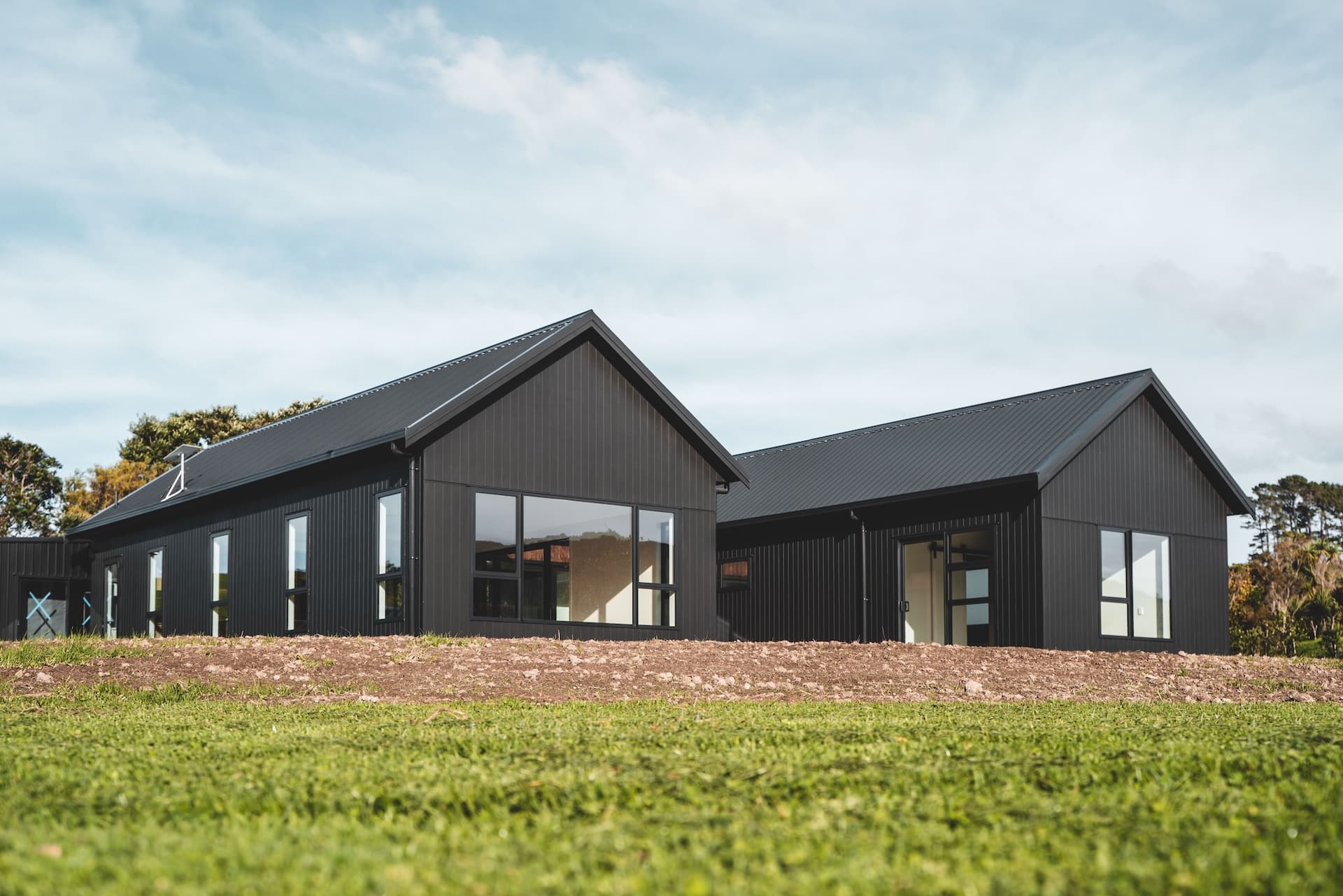
- Cladding. Cedar (oiled or naturally weathered), proper composite, or a properly detailed plaster system over a cavity. Whatever the choice, it has to be specified and detailed for coastal exposure, not just installed.
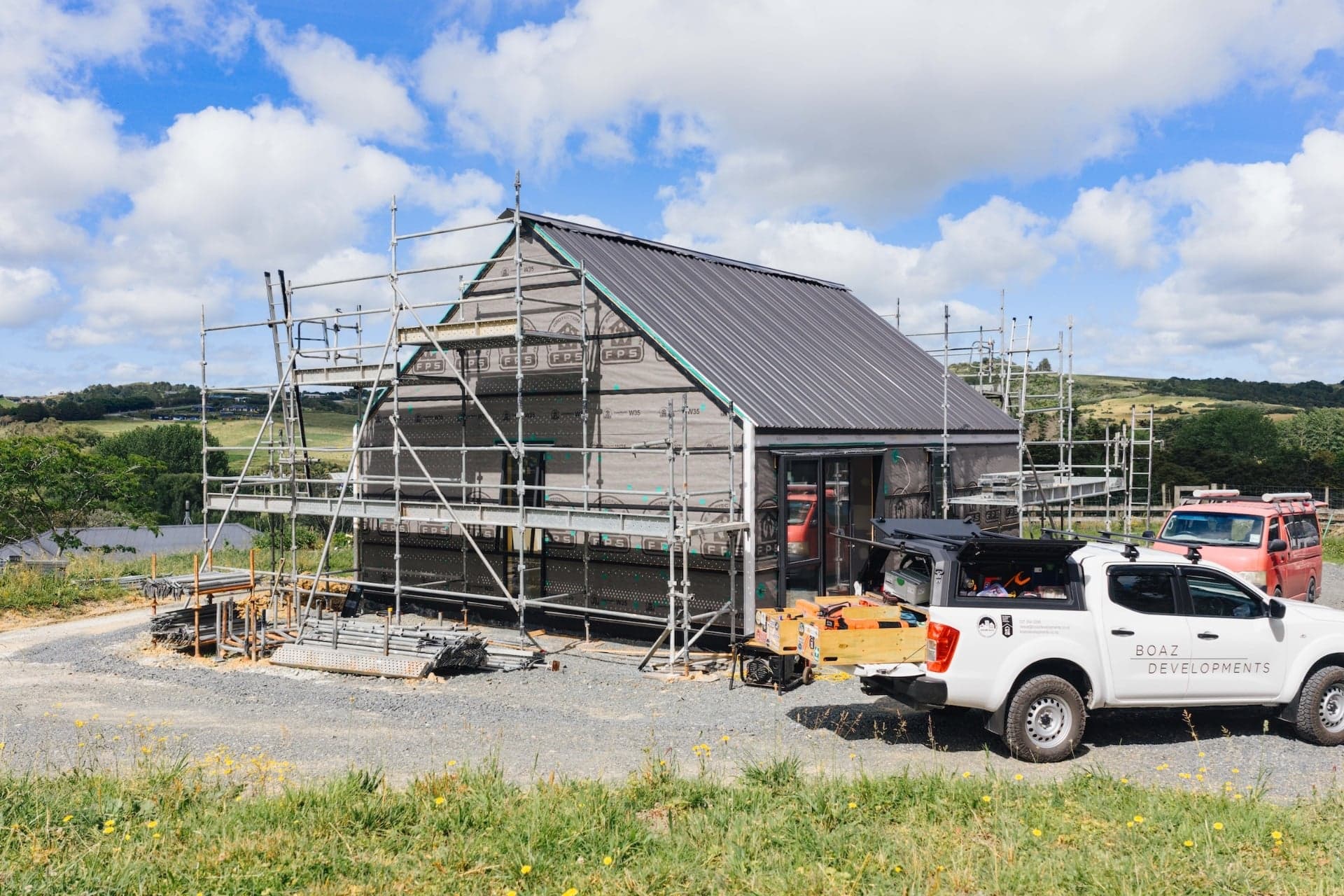
- Roof. Long-run steel in coastal-grade finish. Marine-grade fixings throughout. Generous eaves where the wind zone allows.
- Joinery. Thermally broken aluminium or timber-framed double glazing rated for coastal exposure. Standard joinery doesn't belong this close to the sea.
- Decks. Hardwood, premium composite, or a high-spec H4-treated softwood with the right finish. Cheap decking dies in three summers.
- Fixings. Stainless steel - 316 grade in the most exposed areas. The cost gap on a whole house is real but small relative to recladding in year six.
The right materials, properly detailed, give you a home that ages gracefully here. The wrong ones make you a slave to maintenance.
6. Renovating an older Langs Beach holiday home
Plenty of the work we do at Langs Beach is on older holiday homes that are tired but well-positioned. The same patterns turn up over and over - tired insulation or none, single-glazed aluminium joinery that's pitted from salt, weathertightness issues at decks and parapets, and asbestos in older linings.
None of that is unusual. The honest reality of older Langs Beach renos is that the biggest variable is what's hidden until the linings come off. A good builder quotes with a clear contingency line for the unknowns rather than handing you one fixed number that won't survive contact with reality.
The flip side: a well-renovated older Langs Beach home in an established position is often a better result than a new build on a raw lot, because the trees are grown, the site has settled, and the position is usually something you couldn't replicate on a new section. If you're weighing the call, our piece on signs your Northland home is due for a renovation covers what's worth checking before you decide either way.
7. Consents and timeframes
Langs Beach building consents go through Whangārei District Council. The standard building consent process applies, but a few extra factors are common:
- Coastal hazard overlays. Some Langs Beach sites sit within hazard zones that affect what can be built and where.
- Geotech. Sandier near-beachfront and sloped back-block sites usually need a geotechnical investigation as part of the design.
- Resource consent triggers. Height, height in relation to boundary, or land-use rules can trigger resource consent on top of the building consent.
The practical effect is that the design and consent phase can run longer than a simple inland section. Build the lead time into your start date. Our building consent walkthrough for Northland explains what the journey looks like from lodgement through to code of compliance.
8. Frequently asked questions
What's it like to build at Langs Beach compared to inland Northland?
Coastal premium plus rural servicing. Marine-grade fixings, coastal-rated joinery, durable cladding and wind-zone framing on the house, plus tank water, septic and often a longer power run on most sections. The house costs more to build properly here than inland, and there's more around the house to pay for.
Do most Langs Beach sections need tank water and septic?
Yes. Town water and town sewer aren't available across most of the catchment, so rainwater tanks and an on-site septic system are the norm. Plan for $30,000 to $60,000 combined.
Which way do most Langs Beach homes face?
The bay opens north-east, so the outlook and the warmest aspect line up well on most sites. Smart design balances that with shelter from the winter southerlies hitting the back of the house.
Are Langs Beach builds slow to get consented?
Not unusually slow, but plan carefully. Coastal hazard overlays, geotech, and resource consent triggers can add time before the building consent itself goes in.
Should I renovate an older holiday home or build new?
Depends on the bones. A sound older home in an established position is often worth renovating for the mature site and the outlook. A tired one with rotten framing or weathertightness issues can cost more to fix than to replace. A proper structural look-over decides it.
Talk to a builder who lives here
We're based at Langs Beach. The coast, the wind, the salt, the sites - they're not abstract for us. They're where we work and where we live.
We're a family-owned, locally-owned building team handling new builds, renovations and extensions and bach renovations across Langs Beach, Mangawhai, Mangawhai Heads, Te Arai and Waipu. Have a yarn with Reece for an honest read on what's possible on your section.
- The Boaz Developments team