
Every builder in Northland will tell you they build quality homes. Most of them mean it. But "quality" is a word that does a lot of work on a website and very little on a building site, and when you're about to hand someone a very large sum of money it's worth knowing what it actually means.
It's a good time of year to ask. Awards season is on, the industry is showing off its best finished homes, and the hero shots are everywhere. We think those photos are the wrong place to look. The things that make a home genuinely well built are mostly invisible once it's finished, and they're the same things worth holding any builder to, awards or not.
So this is the honest version of what a well-built home actually means, what a glossy photo quietly hides, and how you can judge build quality yourself before you sign with anyone. It's the standard we build to on the coast here, so this is the lens we'd want you using on us too.
The short version: A well-built home is about the things you can't see in a photo - resolved design, honest materials, tight detailing at every junction, and workmanship that holds up long after it's lined. A builder doesn't need a trophy or a big brand to be good. Those benchmarks are exactly what you should look for yourself: ask to see finished homes and homes mid-build, look hard at the detailing, and ask about the spec, not just the price.
1. What "well built" actually means
A well-built home isn't the one with the prettiest kitchen. When anyone who knows building assesses a home properly, they look past the styling at how well the thing has actually been made. The same themes come up every time:
- Design resolution. Does the home suit its site, its aspect and the way people actually live in it, or is it a nice-looking box dropped on a section? A resolved design handles sun, wind, outlook, flow and storage without you having to think about it. On a coastal Northland site, that means balancing the view with shelter, not just chasing the outlook.
- Craftsmanship and finish quality. The tolerances. How doors sit in their frames, how tiles line through, how joinery meets a wall, whether the paint lines are crisp and the reveals consistent. This is the difference a good eye notices in the first ten seconds and a cheap build never quite gets right.
- Materials and detailing. The right materials for the environment, specified and detailed properly. On the coast that means marine-grade fixings, coastal-rated joinery, cladding and flashings that will still look good in ten years. A good builder knows the difference between a home that photographs well now and one that will age gracefully.
- How well the home functions. A well-built home works. The living spaces catch the sun, the wind is dealt with, the wet areas drain, the storage is where you need it, and the whole thing feels calm to be in. Function is quiet, and it's usually the thing you only notice when it's missing.
- The workmanship you can't see. This is the big one. Framing, bracing, tie-downs, wrap, flashings, weathertightness detailing, the drainage behind the cladding. None of it shows once the linings go on. All of it decides whether the home is sound in fifteen years. Good builders obsess over it precisely because nobody will ever see it.
Notice how much of that list is invisible in a finished photograph. That's the whole point of the next section.
2. What a glossy photo hides
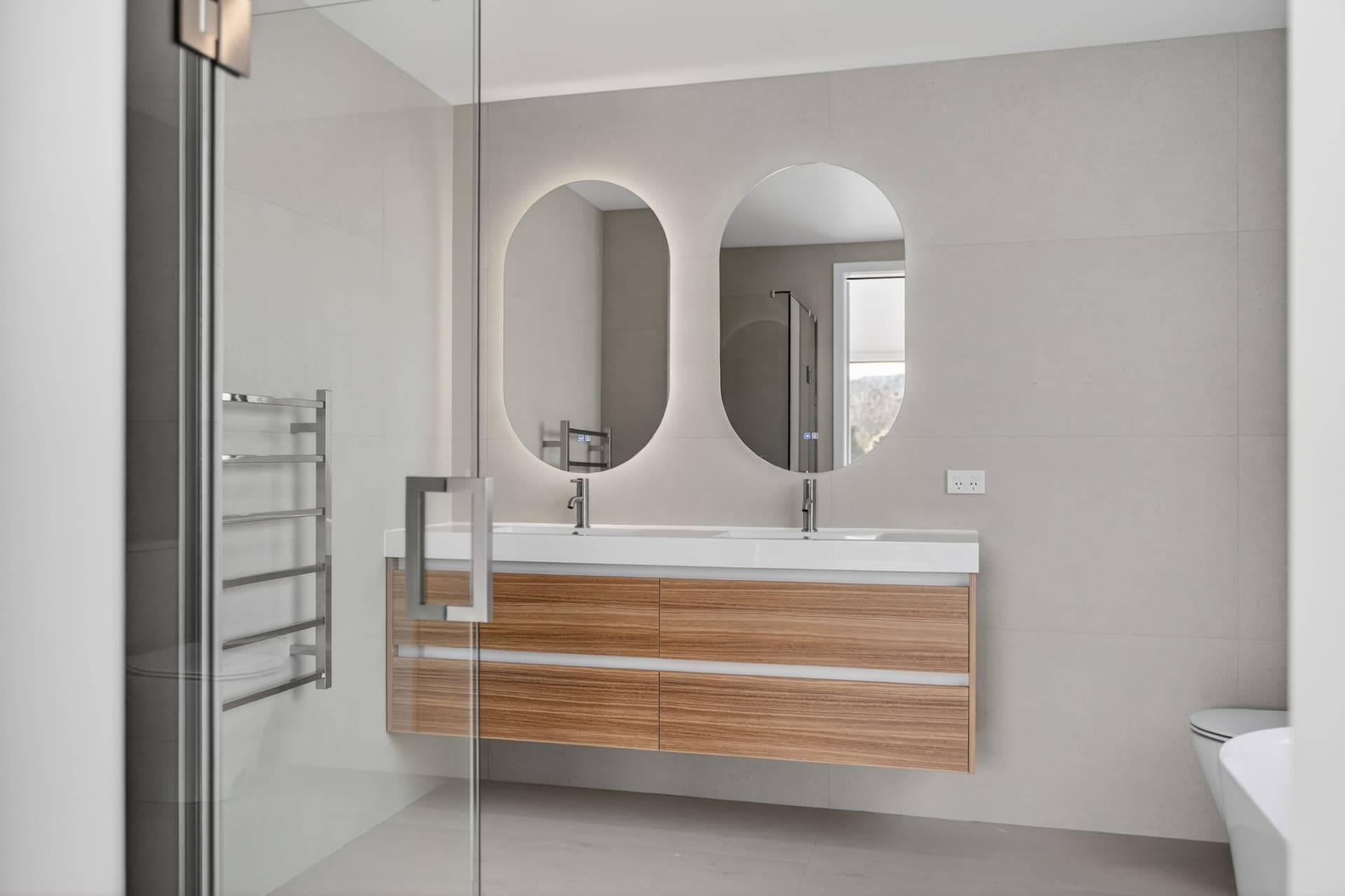
A hero shot on a builder's website tells you about styling, staging and a good photographer. It tells you almost nothing about build quality. Two homes can look identical in a wide-angle photo on a sunny day and be completely different underneath.
What the photo can't show you:
- How the invisible work was done. You cannot photograph proper flashing detail behind cladding, or tie-downs sized for a High wind zone, or a weathertight junction at a parapet. These are the things that fail expensive later, and they're exactly the things a photo skips.
- The tolerances up close. Wide shots flatter everything. Get within arm's reach of a real home and you see whether the joinery lines through, whether the tiling is set out properly, whether the reveals are consistent. Quality lives at that distance.
- How it will age. A brand-new build always looks good. The question is what it looks like after three coastal summers of salt and UV. Cheap cladding chalks, cheap decking warps, standard fixings rust. A photo taken on handover day can't tell you which way a home is heading.
- What it was like to build with the people who made it. No photo tells you whether the builder communicated honestly, held the timeline, handled the variations fairly, or fixed the thing that went wrong without a fight. That story only comes from talking to past clients.
None of this means photos are dishonest. It means they're the wrong tool for judging quality. For that, you need to get closer, which is the practical part.
3. How to judge build quality yourself
You don't need to be a builder to spot a well-built home. You need to look at the right things and ask the right questions. Here's the approach we'd genuinely recommend, and one we're happy to be measured against.
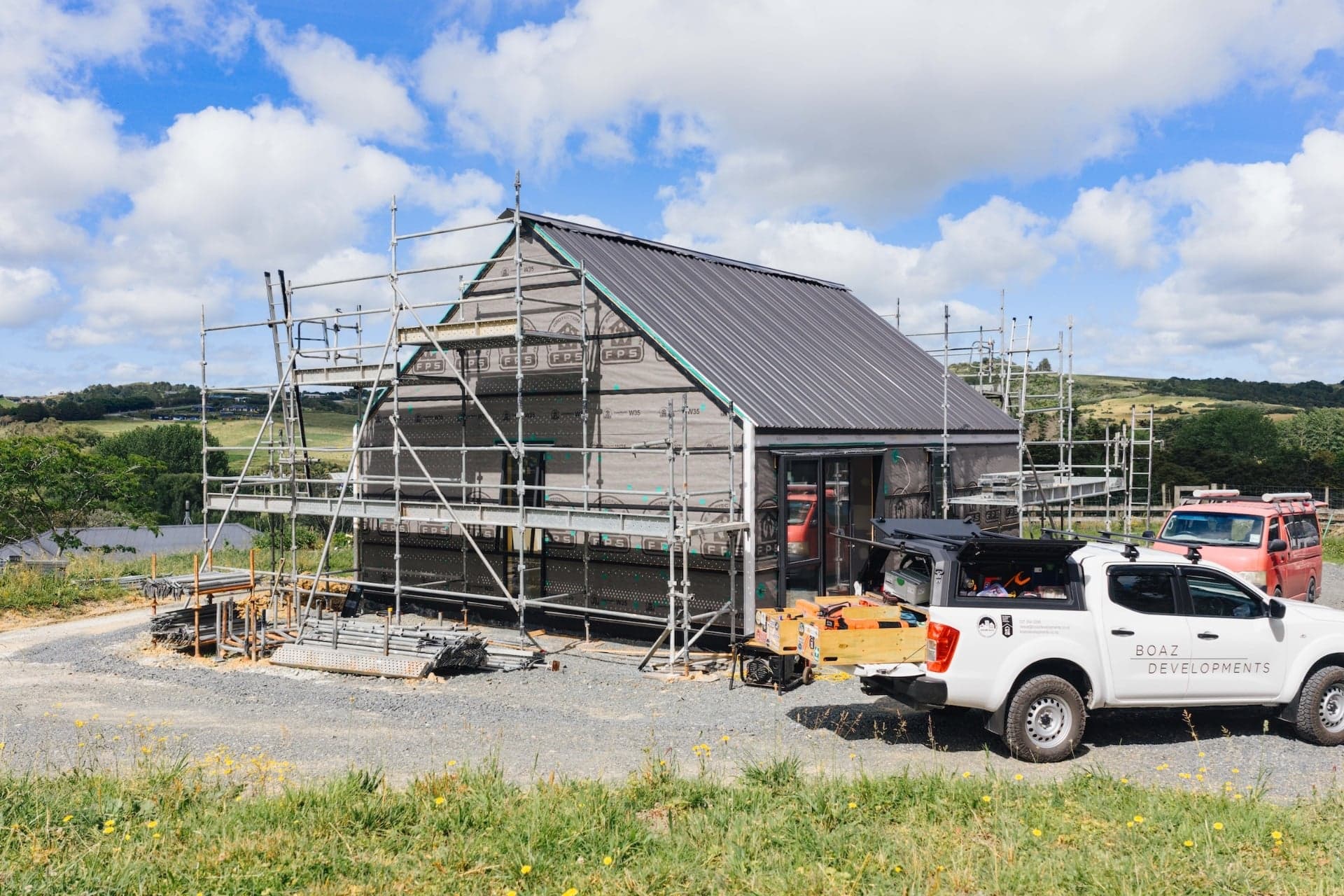
Ask to see finished homes and homes mid-build. This is the single most useful thing you can do. A finished home shows you the standard of the final result. A home mid-build shows you how the builder works when it's all still exposed - the tidiness of the framing, how the wrap and flashings are done, whether the site is organised or chaotic. A builder who's confident in their work will happily walk you through a live job. Hesitation to show you one tells you something.
Get close to the detailing. In a finished home, look where materials meet. Flashings, the junctions between cladding types, tiling set-out, the tolerances on doors and cabinetry, how the deck meets the house. Good detailing looks deliberate and consistent. Rushed detailing looks like a series of small compromises, and once you start seeing them you can't stop.
Talk to past clients about the hard parts. Anyone can hand you a reference who had a smooth job. The more useful question is what happened when something went wrong, because on every build something does. Did the builder front up, communicate, and sort it fairly? That's the real measure. Our guides on how to choose a builder in Northland and what to look for in a Mangawhai builder in 2026 go deeper on the questions worth asking.
Ask about the spec, not just the price. Two quotes that look similar on the bottom line can be built to completely different standards. The cheaper one is often cheaper because the spec is thinner - lesser fixings, standard joinery on a coastal site, less generous weathertightness detailing. Ask what's actually in the build, and ask why. A builder who knows their coast will have clear reasons for every choice.
4. The quality benchmark, applied to your build
Here's how those themes translate into things you can actually check, on any builder, anywhere:
| What quality looks like | What you can check yourself |
|---|---|
| Design resolution | Does the home suit its site, sun and wind? Walk a finished one and see if it feels right to be in. |
| Craftsmanship and finish | Get close. Look at tolerances, junctions, tiling set-out, joinery reveals. |
| Materials and detailing | Ask what's specified and why. On the coast, ask about fixings, joinery and cladding grade. |
| How it functions | Ask past clients how the home lives through a full year, not just how it looks. |
| Invisible workmanship | Walk a job mid-build. Look at framing, wrap, flashings and how tidy the site is. |
The value of this list is that it forces attention onto the parts of a build that decide whether you'll love the home in fifteen years, and away from the parts that just photograph well. If you use nothing else from this piece, use that shift in where you look.
5. Where we sit on all this
We'll be straight with you. We're not the biggest name on the coast and we don't chase trophies. What we can show you is the standard, on every job.
Our team holds current Licensed Building Practitioner licences, so every restricted stage of your build is signed off by a licensed builder. We're members of New Zealand Certified Builders, which means a recognised trade qualification in carpentry is the minimum, not a marketing line. And Reece runs every job in person, so the person who quoted your build is the one standing on site when the framing goes up.
We run a design + build approach with in-house drafting, which means the home is resolved on paper - the aspect, the shelter, the flow, the detailing - before a single board goes up. Concept to keys, under one roof, with the same people accountable the whole way through. On the coast that resolution matters more, not less, because the sites are harder and the salt is unforgiving.
No corners cut isn't a slogan for us, it's the only way a build survives this coast. Ask to walk one of our finished homes, and ask to walk a live site. The detailing is what we'd want you looking at.
6. Frequently asked questions
What does a well-built home actually mean?
A well-built home is one that suits its site, is put together properly in the parts you'll never see, and still looks and works right ten years on. In practice that means resolved design for the sun, wind and outlook, tight detailing where materials meet, materials specified for the environment (on the coast, marine-grade fixings and coastal-rated joinery), and framing, wrap and flashings done properly before the linings go on. It's the boring, invisible work that decides whether a home lasts.
Does a builder need awards or a big brand to be good?
No. Plenty of excellent builders never enter awards or join the biggest association, and a home doesn't need a trophy to be built to a high standard. What matters is whether the builder is a Licensed Building Practitioner, holds a recognised trade qualification, and holds themselves to the same benchmarks on every job - resolved detailing, honest materials, workmanship that holds up once it's lined. The best check is walking a finished home and a live site.
How can I judge build quality myself?
Ask to see finished homes and homes mid-build. In a finished home, look at the detailing where materials meet - flashings, junctions, tiling, the tolerances on doors and joinery. On a live site, look at how tidy the framing and wrap are and how the invisible work is being done. Talk to past clients about how the builder handled the things that went wrong, because something always does. Quality shows up in the boring details, not the hero shot.
What should I ask a builder about their standards?
Ask what's in the spec, not just the price. Ask which fixings, cladding, joinery and weathertightness details they use on a coastal site and why. Ask to walk a current job. Ask how they handle variations and the unknowns behind old linings. A builder who's confident in their standard will happily show you a home mid-build and talk you through the parts you'll never see once it's finished.
Does building to a high standard cost more than a basic build?
Building to a genuinely high standard costs more than the cheapest way to get a house up, yes, but the gap is smaller than people expect and it's mostly in materials and detailing rather than headline labour. Marine-grade fixings, coastal-rated joinery, proper flashings and honest weathertightness detailing add cost up front and save far more over the life of the home. The expensive build is the one you have to repair in year six.
Talk to a builder who lives here
Look past the photos and ask what a home is actually made of. That's the standard we hold ourselves to on every job.
We're a family-owned, locally-owned coastal building team based at Lang's Beach, handling new home builds and design + build across the Mangawhai and Bream Bay coast. If you're weighing up a builder and want an honest read on what a properly built home looks like on your site, have a chat with Reece. Walk one of our jobs, get close to the detailing, and judge it for yourself.
- The Boaz Developments team