Before you buy a section at Te Arai, check five things: which council's rules apply, what is registered on the title, what the ground is like, what services reach the boundary, and how you get a truck onto it. Every one of those can move your build budget by tens of thousands of dollars, and every one can be checked before you sign.
We build across this coast from our base at Langs Beach, and the conversation we would most like to have with a Te Arai buyer is the one before the sale goes unconditional. After that, the section is what it is, and the house has to fit it.
The short version: Te Arai is Auckland Council, not Kaipara. Read the title and any covenants before you fall for a plan. Get a view on the ground early. Assume tanks and on-site wastewater until someone shows you otherwise. And walk the access in your head with a concrete truck on it.
1. Start with the right council
Te Arai sits under Auckland Council and the Auckland Unitary Plan. That surprises most people, because Mangawhai and Mangawhai Heads next door are Kaipara District, and Langs Beach, Waipu and Ruakākā are Whangārei District.
It matters because each council writes its own rules for setbacks, site coverage, building height and the coastal and ecological overlays. Advice you picked up about a Mangawhai section does not carry across the boundary. When you order the LIM (the Land Information Memorandum, the council's summary of what it knows about the property), order it from Auckland Council and read the zoning and overlay sections closely.
If a section sits inside a coastal hazard area or an ecological overlay, resource consent may be needed on top of the building consent. That is not a reason to walk away. It is a reason to allow more time and some planning cost in the budget.
2. Read the title, then the covenants
The Record of Title lists the instruments registered against the land. For a build, three kinds matter most:
- Covenants. Many of the newer Te Arai sections come with design covenants and a set of design guidelines. They can cover roof pitch, cladding materials and colours, fencing, planting and the size of the house. Some also set a timeframe to start and complete the build.
- Consent notices. These are conditions the council attached when the land was subdivided. They can require a specific foundation design, set a building platform, or limit earthworks. They bind whoever owns the land.
- Easements. Rights of way, drainage and service easements can decide where the house and driveway are allowed to go.
Your lawyer will explain the legal effect. What a builder adds is what those instruments do to the build: whether the covenant cladding list suits a coastal spec, whether the building platform leaves room for the house you have in mind, and whether a start-by date is realistic once design and consent are counted. Our earlier Te Arai guide goes further into how design review panels tend to work.
3. Get a read on the ground
Ground conditions near this coast vary a lot over short distances. Sandy soils are common closer to the dunes, and some sections are sloping or have fill placed during subdivision.
What to ask for:
- Any existing geotechnical report. Developers often commission one for the subdivision. It is a starting point, not a substitute for a report on your building platform.
- Whether fill has been placed on the lot, and whether it was certified.
- The slope across the building area. A few metres of fall across the house footprint can mean retaining, extra earthworks and a more involved foundation.
A geotechnical investigation for your own design costs a few thousand dollars and tells your engineer what the foundations actually need to be. On a coastal section it is money well spent early. For how slope changes the job, see our guide to building on a bush or sloping site.
4. Find out what services reach the boundary
On most rural Te Arai sections there is no town water or sewer. Plan for:
- Rainwater tanks for your household water.
- An on-site wastewater system with a disposal field, designed for the house and the soil, and consented with the build.
- A power connection whose cost depends on how far the nearest supply is from where the house will sit.
The disposal field needs its own space and setbacks, which can affect where the house and any future granny flat can go. The Te Arai guide sets out indicative budgets for each service. The point here is simpler: confirm what exists at the boundary for this lot, in writing, before the sale goes through.
5. Picture a truck on the access
A section can look easy from the road and still be hard to build on. Think about:
- Driveway length and gradient. A long or steep drive adds cost to build and can limit which trucks and machines get in.
- Wet-weather access. Soft ground can stop deliveries and concrete for days at a time in a wet spell.
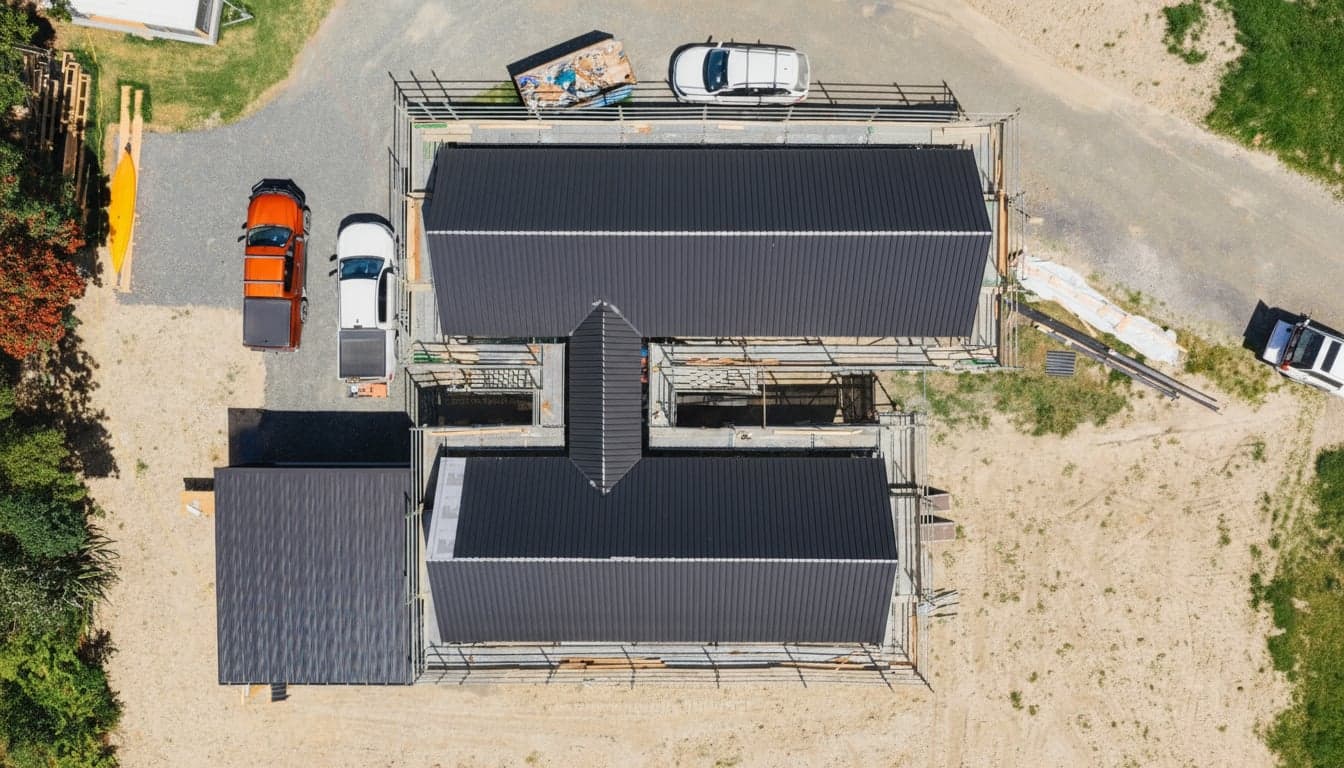
- Turning and laydown space. Somewhere to put materials, park a bin and turn a truck without damaging the finished driveway.
These are cheap to think about now and expensive to discover in the middle of the foundation stage. Our post on how long a coastal build takes covers where access tends to cost time.
6. Check the exposure
Te Arai is open coast. Many sections carry high wind loads and sit in salt spray, which drives framing, fixings, cladding and joinery choices. It is not a problem with the section, but it is a real line in the budget compared with an inland site. Ask early which wind zone the site is likely to fall into, and make sure any cladding the covenants require can be detailed properly for that exposure.
7. Put a number on the site before the house
The house is only part of what you are buying into. Site works, servicing, geotech, consents and connections sit on top of the build rate. Our Mangawhai cost guide suggests adding 20 to 30 percent on top of a per square metre build figure for those items, and a rural coastal section can sit at the top of that range.
For a first rough number, the Mangawhai build cost estimator gives you a range in a couple of minutes. For a number tied to a real section, we need to see it.
Frequently asked questions
Which council covers Te Arai?
Auckland Council. Te Arai sits under Auckland Council and the Auckland Unitary Plan, not Kaipara District, even though it is ten minutes down the road from Mangawhai. Your LIM, your building consent and any resource consent all go through Auckland Council.
What documents should I ask for before buying a Te Arai section?
The Record of Title with every instrument on it, the developer's design guidelines if there are any, a LIM from Auckland Council, any existing geotechnical report, and written confirmation of what services reach the boundary.
Do Te Arai sections have town water and sewer?
Most rural Te Arai sections do not. Expect rainwater tanks and an on-site wastewater system. Confirm it for the specific lot rather than assuming.
Can a design covenant stop me building the house I want?
It can shape it a lot: roof form, cladding, colours, fencing, landscaping and sometimes build timeframes. Read the covenants before you brief a designer.
Should I get a builder to look at a section before I buy it?
Yes, if you can. It will not replace a geotechnical report or legal advice, but it catches the obvious budget surprises while you can still walk away.
Walk the section with us first
We are a family-owned coastal builder based at Langs Beach, building across Te Arai, Mangawhai and Mangawhai Heads, with in-house drafting so the design starts from the section rather than a stock plan. If you are looking at a Te Arai section, have a chat with Reece before you go unconditional. We will read the papers with you, walk the site, and give you a free build estimate with the site costs set out honestly.