Concept to keys on a coastal Northland build is measured in months, and the part people underestimate is not the building. It is everything that happens before a digger turns up.
We would rather set that expectation properly at the start than manage disappointment later, so this is the honest stage-by-stage version, including which parts we control and which we do not.
The short version: the physical build is the most predictable stage of the programme. The front end (design, engineering, consent) and the uncontrollables (weather, long-lead materials, council processing) are what actually move a finish date. Plan the whole arc, not just the construction, and start the consent process as early as the design allows.
1. The stages, and who controls each one
| Stage | What happens | Who controls the timing |
|---|---|---|
| Concept and design | Brief, site assessment, concept, developed drawings | Shared. Your decisions drive it |
| Engineering and specialist input | Structural, geotech where the site needs it, services design | Mostly us and our consultants |
| Consent | Lodgement, council processing, requests for further information | Council |
| Procurement and pre-start | Pricing, contract, ordering long-lead items, programming trades | Us, with supplier lead times |
| Site works and foundations | Access, earthworks, drainage, foundations | Us, subject to weather |
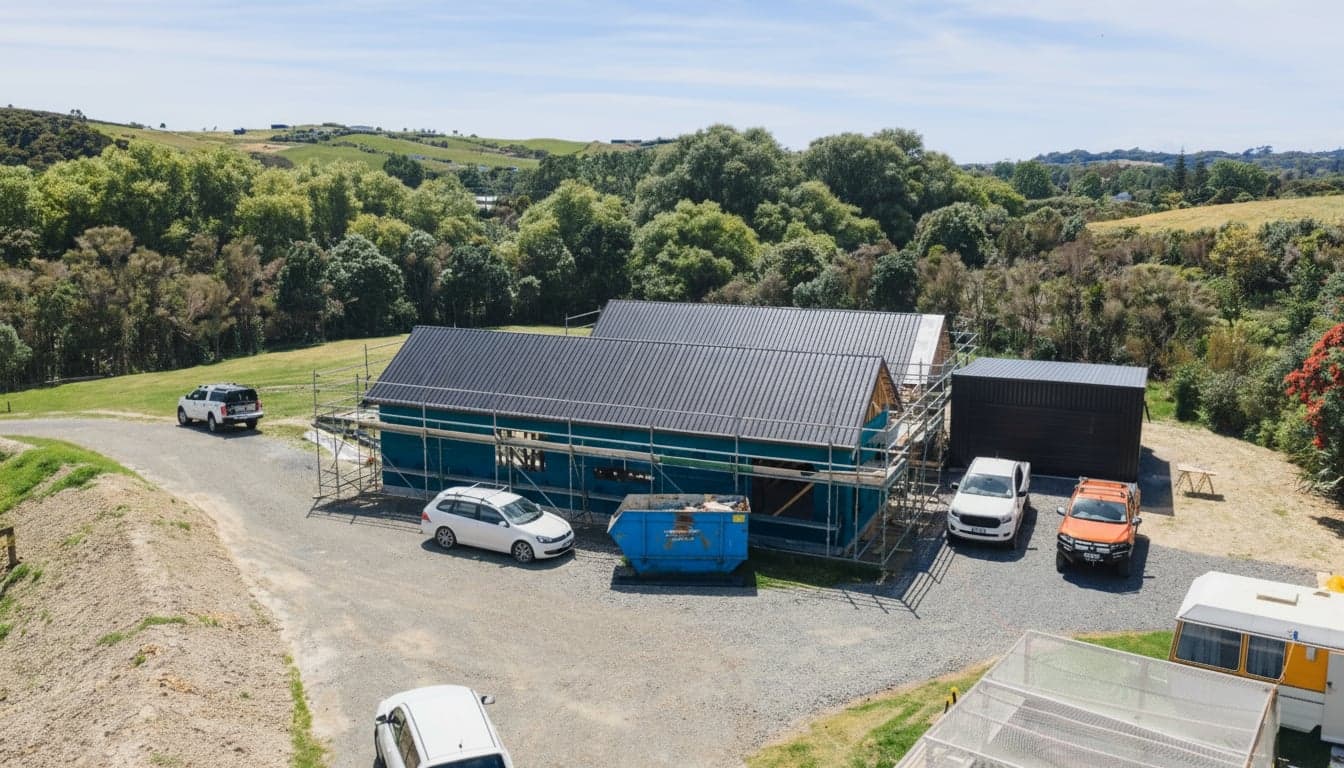
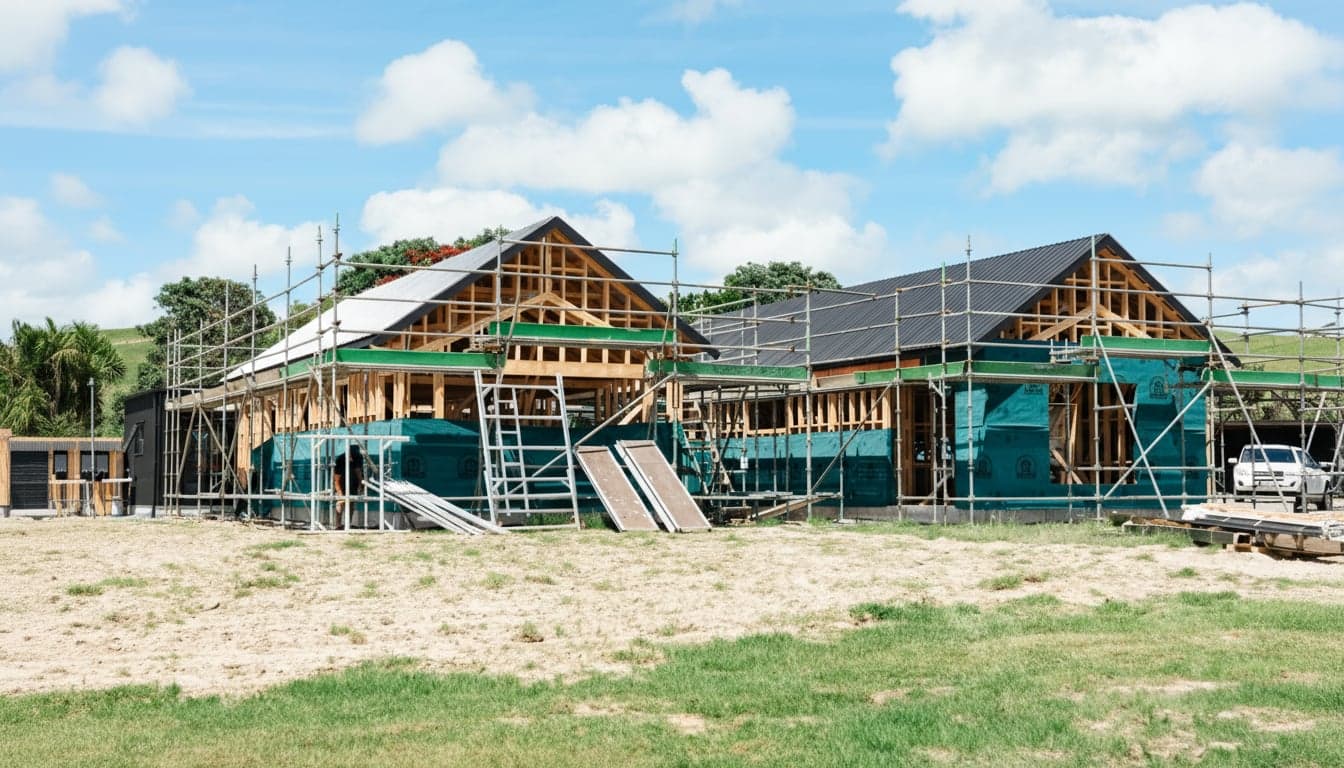
| Build to closed-in | Framing, roof, wrap, joinery installed | Us, subject to weather until the roof is on |
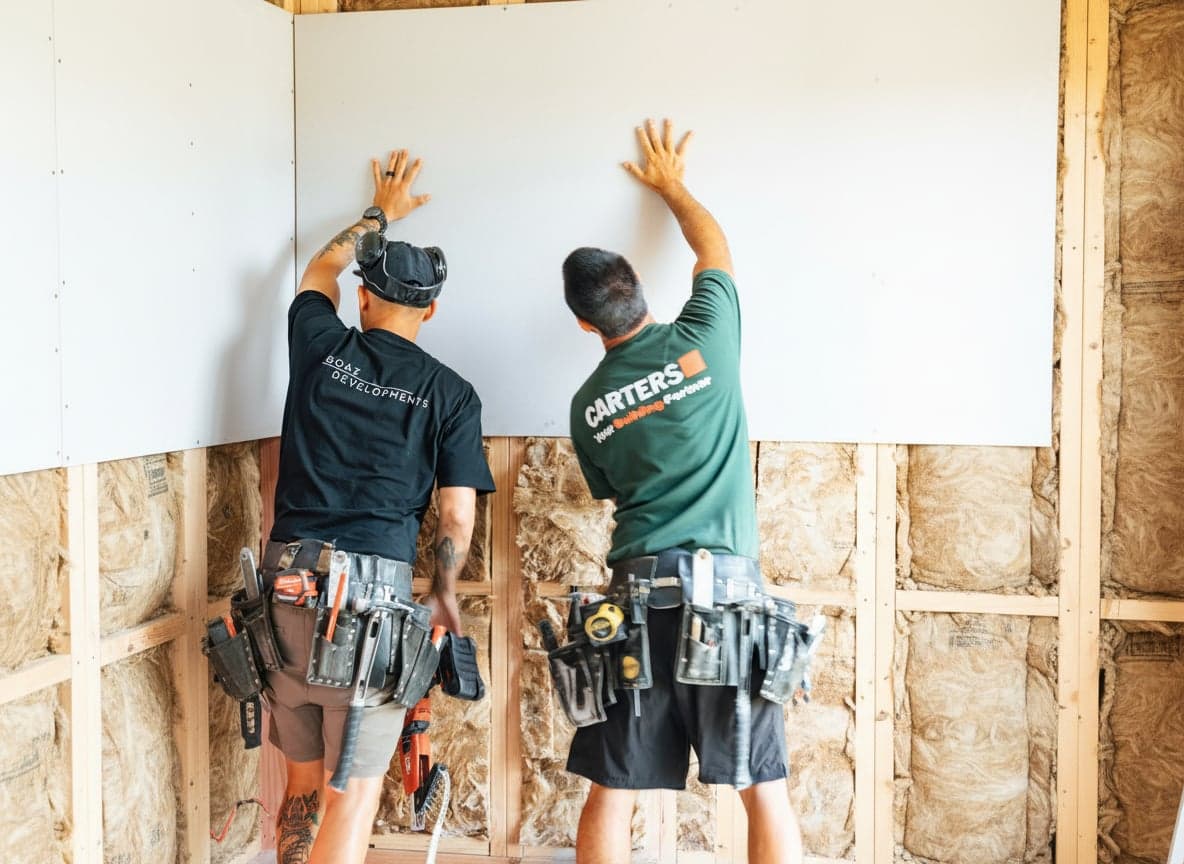
| Interior fit-out | Linings, kitchen, bathrooms, finishes | Us, subject to your selections being locked |
| Completion and code compliance | Final trades, inspections, CCC | Shared with council |
Two columns matter more than the others. The stages marked council and weather are the ones that move without warning. Everything else is manageable with planning.
2. The front end is longer than people expect
Most owners start the clock at "when do you start on site". By then a significant part of the programme has already happened.
Design is genuinely iterative on a coastal site. The section drives the house, and working through orientation, levels, exposure and access properly takes real time. Rushing it is the most expensive saving available, because a decision changed after the drawings are done is a variation, and a decision changed after consent is a bigger one.
Then engineering. On a sloping or coastal site that usually means structural design for the wind zone, and often geotechnical input on ground conditions. On a rural block it means the servicing design too: tank, septic and disposal field all get sized and documented.
Then consent, which sits with council. Kaipara District handles Mangawhai and Mangawhai Heads. Whangārei District handles Langs Beach, Waipu and Ruakākā. Te Arai is Auckland Council, which surprises most people. Processing time varies with their workload and with how complete the application is, and a request for further information restarts part of the clock. Our consent to code of compliance guide walks the paperwork side properly.
What you can do here: make decisions early and hold them. This is the stage where an owner has the most genuine influence on the finish date.
3. What a Northland winter does, and where it does it
Weather affects some stages badly and others hardly at all, which is why the sequencing question is really about which stage lands in the wet months.
- Earthworks and foundations are the exposed stages. Wet ground slows excavation, and on a coastal or rural block it can stop truck access outright for days at a time. This is where a wet winter costs the most.
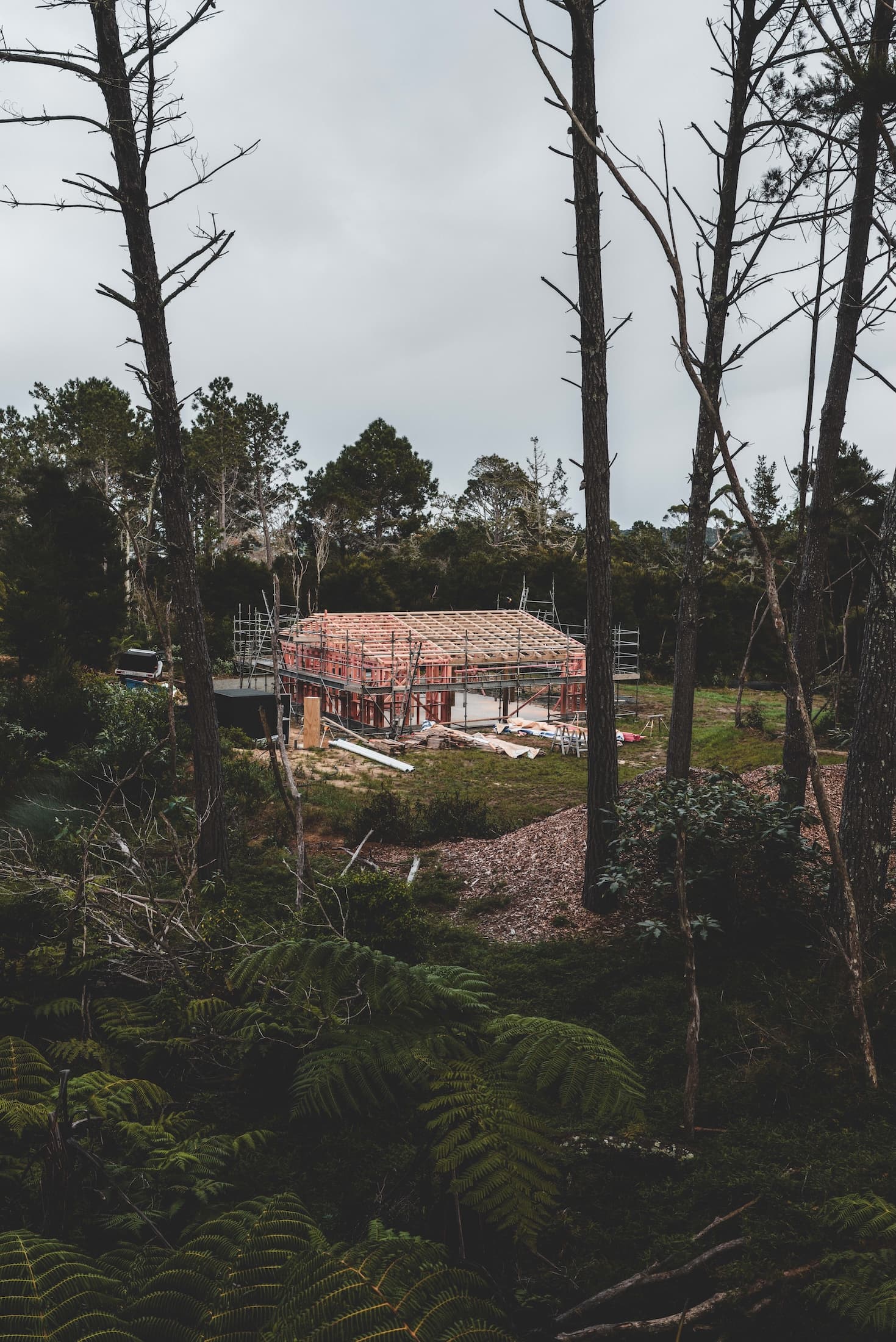
- Framing and getting the roof on is the race. Until the building is closed in, rain is a working constraint.
- Once closed in, weather stops being a programme driver almost entirely. Interior work carries on regardless.
That is the whole logic behind starting a build in winter: it is not about avoiding the wet, it is about which part of your build is standing in it.
4. The delays that are specific to this coast
Three, and they come up often enough to plan for.
Site access on rural and coastal blocks. A long driveway, a soft paddock crossing or a steep approach all become programme items when the ground is wet. On some sections the honest answer is that certain stages simply cannot happen in a wet week.
Servicing on off-network blocks. Tank water, septic systems and power runs each carry their own lead times and their own inspections. A block already on town services skips most of this. A rural block does not, and the sequencing has to allow for it.
Long-lead items, particularly joinery. Coastal-rated joinery is not always a stock item, and a coastal specification can mean a longer wait than a standard one. This is the classic cause of a build sitting at 95% waiting for one delivery. We order these early precisely so they do not become the critical path.
5. What "honest timelines" means when something slips
Every build hits something. Ours do too. The difference is what happens next.
What we commit to:
- A stage-by-stage programme at the start, not a single completion date pulled out of the air.
- Telling you as soon as we know, not at the point where you would have noticed anyway.
- Saying which stage is affected and what it does to the ones after it, so you can plan around it rather than just absorb it.
- Being straight about whose it is. If a delay is ours we will say so. If it is council, weather or a supplier, we will say that too, and what we are doing about it.
A programme that is never revised is not an accurate programme, it is one nobody is updating. We would rather give you a real one and keep it current.
6. What actually speeds a build up
Not much, honestly, but the things that do are almost all at the owner's end.
- Decide early and hold it. Changes after drawings cost time as well as money, and the cost of both rises the later they come.
- Lock selections before they are needed. Kitchen, bathroom, flooring, tapware. A fit-out stage waiting on a decision is the most avoidable delay there is.
- Start the consent process as soon as the design allows. It is the longest thing you do not control.
- Get the servicing sorted early if you are on a rural block, because it has its own timeline running in parallel.
- Pick a builder who is not juggling more than they can staff. A programme is only as real as the crew available to run it.
7. Ask for the programme, not the number
When you are comparing builders, ask for the stage-by-stage programme rather than a completion date. The programme tells you whether someone has actually thought about your site, your servicing and your consent path. A single date tells you nothing except how confident they are willing to sound.
If you want a real one for your section, have a yarn with Reece. We will walk the site, talk through the stages that apply to your project, and give you a free build estimate with the timeline set out honestly, including the parts we do not control.