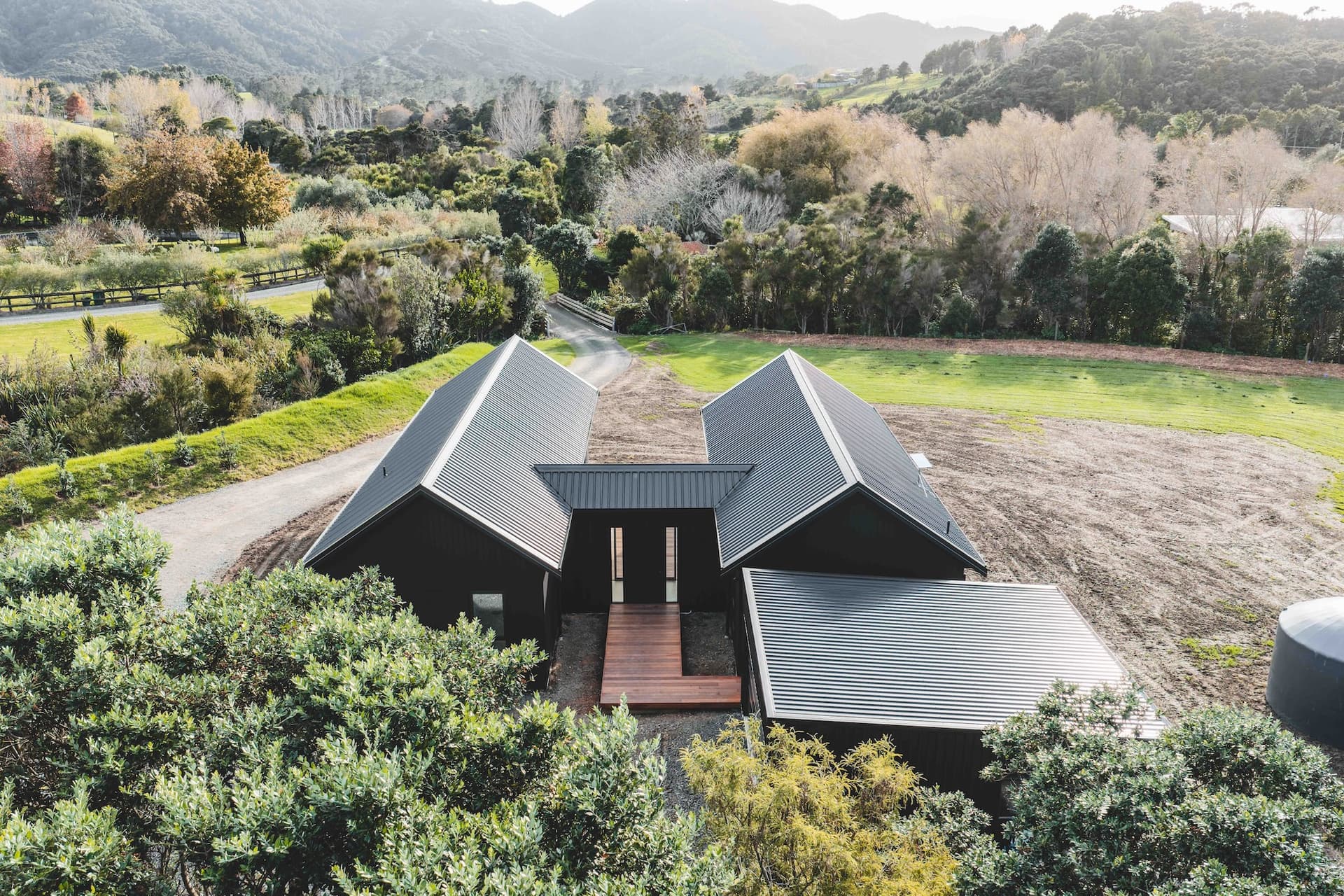
Waipu is the northern end of this coast, and it has a different feel to the rest of it. The Scottish-settler township with its pipe-band heritage, the flats and lifestyle blocks running out toward the river and the estuary, and then the road down to Waipu Cove where the coast opens up again. It's Bream Bay, same stretch of water as Langs Beach and Te Arai, but Waipu carries its own character.
That mix is the thing to understand before you build here. A Waipu project might be a house on a rural lifestyle block well back from the sea, a near-beach build down at the Cove that's every bit as coastal as anywhere on the coast, or a section in or near the township. Those are three quite different building propositions, and the honest version of what your project involves depends a lot on which one you're on.
This guide is the grounded read on building and renovating in Waipu - the sites, the servicing, the coastal exposure where it applies, the council path, and how it compares to building further down the coast. We're based just down the road at Langs Beach, so this is genuinely our patch.
The short version: Waipu builds fall into three broad types - rural lifestyle blocks (tank water, septic, longer power runs), near-beach sites at Waipu Cove (full coastal detailing for salt and wind), and township sections (more sheltered, some reticulated servicing). Waipu sits in the Whangārei District, not Kaipara like Mangawhai, so consents go through a different council. Get the site type right up front and the rest of the budget follows sensibly.
1. Three kinds of Waipu site, three different builds
The first thing to work out with a Waipu build is which kind of site you're on, because it shapes almost everything downstream.
- Rural lifestyle blocks. A lot of Waipu's building activity is on lifestyle blocks around the township and out toward the flats and river. These are usually off the reticulated network, which means servicing is on you: tank water, an on-site septic system, and often a meaningful power run in from the road. Space and privacy are the upside; the servicing budget is the thing people underestimate.
- Near-beach sites at Waipu Cove. Down at the Cove you're on a genuine coastal site. Salt, wind and UV all apply, and the build has to be detailed for them the same as any beachfront position on this coast. Treat a Cove build as coastal from day one.
- Township and near-township sections. In and around the Waipu township itself, sites tend to be more sheltered and some carry reticulated servicing. These are often the most straightforward of the three, closer to a standard build than a full off-grid coastal one.
For how the section, servicing and finish all stack into a build budget across this coast, our 2026 Mangawhai cost guide breaks the numbers down across new builds, renovations and extensions. The figures travel well up to Waipu.
2. Servicing on the lifestyle blocks - the number people miss
If you're building on a rural block around Waipu, servicing is the line that most often gets underestimated. Town water and town sewer aren't a given once you're off the township, and a block set well back from the road can carry a real power-supply cost too.
| Service | What it usually means on a Waipu lifestyle block | Rough budget (NZD) |
|---|---|---|
| Wastewater | On-site septic system with a properly sized disposal field, consented as part of the build | $25,000 - $45,000 |
| Water | Rainwater collected off the roof into tanks, typically 25,000 - 30,000L capacity, with pumps and filtration | $8,000 - $20,000 |
| Power | Underground or overhead supply, cost driven by distance from the existing network | $5,000 - $35,000 |
None of this is unusual for a rural coastal section. It just has to be in the budget from day one rather than turning up as a surprise. On a block set well back, these three lines together can add fifty to ninety thousand before the house itself goes up. Township sections with reticulated servicing avoid a good chunk of this, which is part of why the site type matters so much to the early budgeting.
3. Coastal exposure at Waipu Cove
The Cove is where Waipu meets the open coast, and a near-beach build there needs the same respect for salt and wind as anywhere on Bream Bay. This isn't background detail on those sites - it's the thing that defines the material and detailing spec.
What it means in practice:
- Wind. Exposed coastal sites carry higher wind zones, which means heavier framing, more bracing, stronger fixings and proper tie-downs. The house has to stay where you put it.
- Salt corrosion. Standard galvanised fixings rust within a few years this close to the sea. The spec calls for stainless steel fixings on cladding, soffits, decks and anywhere exposed to salt air. The premium is real and not skippable.
- UV. The summer sun is harder on materials near the water than people expect. Cheap cladding fades, cheap decking warps, cheap joinery degrades. Specify for the exposure.
The further back from the Cove you build, the more that exposure eases - a sheltered inland lifestyle block or a township section doesn't take the same hammering. But get it wrong on a near-beach site and you'll be repairing it inside five years. For a deeper read on how this coastal environment shapes material and detailing choices, see our coastal building guide for Mangawhai and Northland. Our neighbouring-coast piece on building at Langs Beach covers the same exposure from just down the road.
4. The council path - Waipu is Whangārei District, not Kaipara
Here's a distinction that trips people up. Waipu sits in the Whangārei District, so building and resource consents go through Whangārei District Council. Just down the coast, Mangawhai is in the Kaipara District under a different council entirely. The coast is one continuous stretch of sand, but the council boundary runs between the two towns.
Why it matters:
- Different council, different process detail. If you've been reading Mangawhai-specific consent guidance, don't assume every part of it carries across to Waipu. The broad national building code is the same, but the local council you lodge with, and some of the district-specific rules, are not.
- Site-specific factors still apply. Coastal sites, sloped sites and blocks needing geotechnical investigation all add steps before the building consent itself goes in, wherever you are on the coast.
- Plan for a careful consent, not a rushed one. Especially on a coastal or rural block, build the design-and-consent lead time into your start date.
We handle the consent path on both sides of that council boundary regularly, so the difference is routine for us. Our building consent walkthrough for Northland explains what the journey looks like from lodgement through to code of compliance.
5. Materials that survive a Bream Bay summer
On any coastal or near-coastal Waipu site, the material choices are what separate a home that ages gracefully from one that becomes a maintenance treadmill. The honest list of what works this close to the sea:
- Cladding. Cedar (oiled or naturally weathered), proper composite, or a well-detailed plaster system over a cavity. Whatever the choice, it has to be specified for coastal exposure, not just installed.
- Roof. Long-run steel in coastal-grade finish, with marine-grade fixings throughout. Generous eaves where the wind zone allows.
- Joinery. Thermally broken aluminium or timber-framed double glazing rated for coastal exposure. Standard joinery doesn't belong near the Cove.
- Decks. Hardwood, premium composite, or a high-spec H4-treated softwood with the right finish. Cheap decking dies in three summers.
- Fixings. Stainless steel, 316 grade in the most exposed spots. The cost gap over a whole house is real but small next to recladding in year six.
On a sheltered inland or township site you have a little more latitude, but the coastal-grade approach never hurts and it's what we default to across this coast.
6. Renovating an older Waipu home
Plenty of Waipu's housing stock is older - township homes and holiday places that are tired but well-positioned. The patterns we see turn up over and over: tired insulation or none, single-glazed aluminium joinery pitted from salt on the coastal ones, weathertightness issues at decks and junctions, and asbestos in older linings.
None of that is unusual. The honest reality of an older reno is that the biggest variable is what's hidden until the linings come off. A good builder quotes with a clear contingency line for the unknowns rather than handing you one fixed number that won't survive contact with reality.
The flip side: a well-renovated older home in an established Waipu position is often a better result than a new build on a raw block, because the site has settled, the trees are grown, and the position is something you couldn't easily recreate. If you're weighing new build against renovation across this coast, our renovations across Northland work covers both, and the new builds side too.
7. How Waipu compares to the rest of the coast
People often ask whether Waipu is cheaper or easier to build in than Mangawhai or Langs Beach. The honest answer:
- The build itself costs about the same. Coastal detailing, wind-zone framing and rural servicing costs apply right across Bream Bay. A house built properly at Waipu Cove costs much the same to build as the same house at Langs Beach or coastal Mangawhai.
- Land can price differently, and it moves. Section prices vary between the towns and shift over time, so check current numbers rather than assuming Waipu is automatically cheaper or dearer. That's the variable to actually research.
- The council is different. As above, Waipu is Whangārei District, Mangawhai is Kaipara. Not a cost difference so much as a process one.
The short of it: don't pick your end of the coast on a vague sense that one is cheaper to build in. Pick the site and the position you want, budget the build honestly for what that site asks, and the numbers land where they land.
8. Frequently asked questions
Do Waipu lifestyle blocks need tank water and a septic system?
On most of them, yes. The township has some reticulated servicing, but the rural lifestyle blocks around it generally sit off town water and town sewer, so rainwater tanks and an on-site septic system are the standard. Plan for $30,000 to $60,000 combined, sometimes more once a longer power run is added.
Which council handles Waipu building consents?
Whangārei District Council. Waipu sits in the Whangārei District, which is a different council from Mangawhai just down the coast (Kaipara District). Worth knowing if you've been reading Mangawhai guidance and assumed it carries straight across.
Is a Waipu Cove build a coastal, exposed site?
Near the beach at the Cove, yes - treat it as a genuine coastal site with salt and wind to design for. Township and inland lifestyle-block sites are more sheltered, so the exposure premium eases the further back from the water you are.
Is it cheaper to build in Waipu than Mangawhai?
Not really on the build itself - the same coastal detailing, wind-zone framing and rural servicing costs apply across the whole coast. Land can price differently between the two and it moves over time, so check current section prices rather than assuming.
Do you build in Waipu?
Yes. We're based just down the road at Lang's Beach, so Waipu is genuinely local for us. New builds, renovations and extensions across Waipu, Waipu Cove and the surrounding lifestyle blocks are core work.
Talk to a builder who lives here
We're based at Langs Beach, just down the coast from Waipu. The rural blocks, the Cove, the wind and the salt, the difference between the two councils - none of it is abstract for us. It's where we work and where we live.
We're a family-owned, locally-owned building team handling new builds and renovations and extensions across Waipu, Langs Beach, Mangawhai and the rest of the Bream Bay coast. Concept to keys, in-house drafting, no corners cut. Have a chat with Reece for an honest read on what's possible on your Waipu section.
- The Boaz Developments team